
Category: Lessons
Photo Essay Ideas: Wasted Resources
The inspiration for our Photo Essay activity is the wasted water essay by Praveena (http://www.indiawaterportal.org/blog/praveena/8064) . Extending this theme of waste, there are a few other topics for the photo essay:
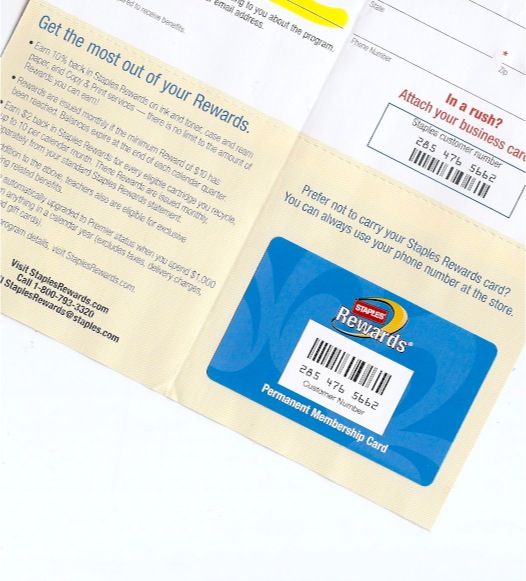
(1) Wasted Paper. I got the idea of this topic when I got a Staples Rewards application and card from the store – it was the 4th or 5th that had been hoisted on me, and it always ends up in the wastebasket. It’s not that there is no use for it, but why isn’t there an easier (non-paper) way to sign up for these rewards? Coupons have already gone mobile and online, so why can’t this card have gone paperless? I think the Borders card is a lot easier too, only requiring an email address. Another wasted paper scenario that makes you thump your forehead is the copy machine that runs a big job only to find out it needs to be run again for some reason (eg, missed copying the flip side of the original). Why can’t there be more intelligence built into a copy machine’s interface? And what about all that junk mail?
(2) Wasted Plastic: Why do so many products come in large plastic packaging? Some are worst than others but is there not an easy solution? Then there are plastic containers such as yoghurt cups or shampoo bottles. Some containers such as restaurant food bowls may make great candidates for reuse (such as planting pots).
(3) Wasted Light: Sun tunnels are a great and efficient way to get light where it is needed. How else can we address wasted light?
(4) Wasted Heat: People have spent quite some time thinking about using waste heat – such as in data centers. Are there are any ideas pertaining to other sources of wasted heat?
Exercise: Saving Household Running Water
One of the biggest resource wastes that we are often exposed to is running (and unused) water – straight from tap to drain. For example, we might be waiting for the shower water to flush the cold water that has been sitting in the pipes and the shower water to warm up. We might be brushing our teeth and not turning off the tap. What can you design to make use of this water? Yes, there are already recirculation systems that use the wasted heat (eg, radiant floor heating) or hot water recirculation systems that keep warm water near the point of use. Tankless water heater systems that are placed near the point of use can also address this issue.
But there is still an opportunity to collect the wasted water and use it efficiently by leveraging ease of use. For example, we could challenge ourselves to design a budget collection system that could be used to water the garden/house plants or wash the floor or rinse the shower door after use (control soap scum deposits).
Exercise: Ball Conduit
Build a conduit out of some simple materials (eg, aluminum foil, straws and cellotape) and roll a ball (or egg) into different receptacles some distance away. The foil would mainly make up the conduit. The straws could act as support. We can make it more challenging by (a) having to go around corners, or (b) use a heavier object such as a golf ball, or (c) go over varying distances without allowing material modification of the conduit. We could make this competitive by making the object delivery a race. For example, we could have three or more buckets at the end (perhaps at different heights, and the conduit design that is the fastest to deliver an object into each receptacle wins.
I came up with this as a way/reason to give out an award for creativity, innovation and leadership. The competition could produce a clear victor based on the quickest time (or success if we use eggs and require that the eggs do not break).
Team Exercise: Newspaper/Newsletter Re-Design or Project Studio
Here is a platform from which we could (a) do the Redesign Challenge (incorporate a new section or reformat an existing section to involve a sustainability theme) or (b) do the Project Studio – something that the students could go back to their home school/university and publish. Remember that we want to make this more than an exercise – we want to have feasibility, efficacy and a solid chance at survival (ie, sustainable).
Most students should be familiar with what roles are involved in a newsletter or newspaper team, but here are a few:
(1) Editors (Chief, Managing, Section, Copy, Creative)
(2) Writers/Reporters (content creators?)
(3) Graphic & Layout Designers
(4) Advertising Executive
(5) Budget/Finance Executive
(6) Printing/Publishing Executive
(7) Distribution
(8) Technology Lead
What are my most impactful sound bites?
Better to be average (customer service)
Lesson: Using Basketball Coaching as a Teamwork Lesson
I personally know (ask my shoulder) that basketball coaching requires a lot of careful planning and precise execution. What most people probably don’t realize and I found resonating with my primary guidebook, “Coaching Girl’s Basketball” by Sandy L. Simpson (2001) is that each practice has to be customized for a team and not individuals – otherwise you are in for an unproductive and risky activity. To run a drill, you have to make sure that it will maintain interest of the group, and be teach-able and learn-able as a group. It also helps that the drill be upgradeable over the course of the season.
For the YCISL, we could assign a volunteer from each team to draw up a lesson to teach a basketball drill. For example, the volunteer instructor could research how to set up a basketball passing drill (chest pass, bounce pass, overhead pass), prepare the lesson, and actually present the lesson to the rest of the team. The instructor would get the experience of working on team dynamics to make sure there is full participation and teamwork. It might help if the instructor has some basketball experience.
This should probably be done outdoors; maybe head to a basketball court.

Article: How to Improve Your Companywide Meeting By Jessie Scanlon (BusinessWeek)
Exercise: Serial Progressive Brainstorming
Here’s an exercise we can use:
Divide into groups of 10 to 12 students; sit in circle. Each person starts with an sketchpad (maybe we will have a keyword in the middle). They will sketch a component (something that serves a function) or a design feature within 30 seconds. After 30 seconds, they pass the sketchpad to the next person in the circle. The next person has 30 seconds to add another component. The sketchpad has to go all the way around the circle, then the last person gets 2 minutes to look over the final sketch and then will describe what the product does.
Possible keywords:
Smart Door – a door that is interactive, user-friendly. more secure, energy-friendly (lets light in when needed), let’s air in for ventilation, emergency workers can get through without having to break it down, width-variable so large objects can through easier…
Smart Television –
Exercise: Teamwork and the Troublemaker
Idea for another exercise. Maybe start with a Dilbert cartoon.
Mark slips of paper with roles on a team. Look up roles from Leadership book.
On one slip, add a note that that person must provide conflict (disagree or question organization) or slow progress (eg, make excuses) We would then observe how the other team members react.
Scenario: the team is tasked with designing layouts for the room…eg, studying, seminar, lecturing, meeting, conference, video conference, teleconference.
Lessons: Using the Ideo Method Cards
These are an excellent resource for facilitating group interaction. The cards could be used for encouraging discussion or planning projects or simulating situations. The cards are focused on the design process and describe how creativity was used to overcome challenges. Especially useful are the four categories of: Learn, Look, Ask and Try.
Learn gets people to access or create knowledge to help determine outcomes. It is a proactive approach to problem solving design.
Look uses observation and list creation. The user or activity is usually that of another person and the designer is the observer. There is minimal interaction.
Ask involves direction of an activity. The observer provides the direction and the user responds with their behavior. The interaction is unidirectional.
Try makes the user and observer the same person. It involves personal experience and articulation.

