
Category: Lessons
Thoughts: Lessons from the Y2E2 Experiment
In my view, the Jerry Yang & Akiko Yamazaki Environment & Energy Building at Stanford University is unsuccessful in so many respects and in total – but we can chalk that up to the experimental nature of the building. But still, one would hope that diligent experimental design would have produced a better experiment. This is one experiment that should end so that another can be started. Accept the failure and learn from the lessons.
Reference Point – The Leslie Shao-Ming Sun Field Station at the Jasper Ridge Biological Preserve of Stanford University. This is a truly amazing structure and space. It embraces sustainable functionality and efficiency, and maintains productivity while continuing to evolve as challenges get addressed.
Architectural – A few of the individual failures include (a) bathrooms opposite faculty offices [see hallway photo at end of this entry] – demonstrates no consideration of how faculty operate, (b) staff administrator offices with no outside windows – the only personnel who typically stay in their offices 8 am to 5 pm and you suppress natural sunlight to their workspace?, and (c) low-height ceilings in lab offices that are reached by going down one floor then up half a floor? There are many more. An exercise for a YCISL workshop could be jotting down the Y2E2 Features on the walls of the red atrium stairwell, and creating a list of failures – and doing a value analysis. Lesson: Ask. Gather information. Do your homework.
Functional – What would one expect to be the main functions of an academic building at Stanford? Teaching? Research? Study areas for students? As for teaching, there is just 1 formal classroom – someone was thinking “one-size-fits-all.” Conference rooms have been partially re-purposed for teaching but you can guess what happens when a space is used for something other than its intended function (many are not great as conference rooms either). Regarding research, look at the distance separating the various researchers in a group, and the distance of faculty offices from their laboratories – hardly encourages research and collaboration. As for study areas, I would acknowledge that there are a number of small meeting rooms that students can use to meet for group work or discussion – a reasonable success. Even the scattered sofas and padded chairs are a plus – but it’s less than what was in our previous building, the Terman Engineering Center (TEC). Lesson: Focus quality on main requirements.
Operational – During off-hours, the building is locked and inconvenient to access even for legitimate use. Then there’s package delivery for which there is no system – delivery persons are constantly looking for anyone to sign for a delivery so they can move on to their next stop. Yes, there are the “neat” thermostat-controlled actuated louvers that let cool air in on the 1st floor at out the top of the atria – but is there any fresh air in the basement (where the labs and research students are?) Lesson: A little compatibility testing (even simulated) can be a huge value differentiator. Fail often. Fail fast. Do something about the failures.
Social – Sadly, a net zero social environment is acceptable here given the politically combative environment that exists because of logistical arrangements. The social environment is net zero and is reflected by typical long empty hallways and distance between co-workers (a logistical failure). There was a good-intentioned idea to create theme areas in clusters but it resulted in broken existing ties and turf wars. Social is another area where Y2E2 scores well below TEC. Lesson: Sustainability should attract people, not repel them.
Health – The flame-retardant soaked artwork in the atria (especially in the red atrium where food service takes place) showed a lack of care for environmental health. But also look at the lack of water fountains as well as poor ventilation in the bathrooms. Then there are the hard, unpadded staircases and lack of real sunlight in the inner spaces (mental health not considered). Lesson: Sustainability should nurture a healthy ecosystem.
Environmental – One of the most interesting positive features of Y2E2 is the enhanced thermal transfer between floors because of the non-carpeted floors – I mention this to all visitors as a smart feature. But among some of the less-than-smart things is that building warmth is dependent on actual bodies in the building. Whereas the Sun Field Station anticipates the time people will arrive for work and initiate heaters/coolers to get to a comfortable temperature by the appropriate time, Y2E2 will only heat up when a critical number of bodies get in (if they get in). Cooling is just as unreliable with a central controller determining the delivery of cool air with no regard for how individual spaces are used – again “one-size-fits-all.” On the “positive” side, TEC was worse at heating//cooling. Lesson: Sustainability savings through discouraging occupancy is a net loss.
Logistical – It is mind-boggling how usability was not at the forefront in Y2E2’s planning and design. I’d like to mention even one user-friendly logistical arrangement in Y2E2, but I can’t think of one (right now). How about a simple enough problem needing a forward-thinking solution such as bicycle parking? Nope, just as bad as it was at the TEC. Could’ve just visited a truly bicycle-friendly university campus such as UC Davis. There is the cafe in the red atrium first floor – glad there is a food outlet in the building but it’s situated next to the classroom and a couple of key conference rooms (which have clear glass sides facing the cafe so there is massive distraction in meetings), and its ordering line and waiting area extends into an entry area so traffic jams are common. Lesson: Usability supports sustainability.
Technology – What would it have taken to make the VoIP jacks a different color from the Ethernet jacks? And one has to check in and out a VoIP audio conference speakerphone? Yes, most conference rooms have a Smart Panel to connect a laptop and connection points in the floor and elsewhere – but reliability should be higher. Yes, we have group videoconference units – but they are underutilized because of scheduling policies and lack of support. Lesson: Efficiency also involves time savings. Make it convenient.
Sustainability – I’d like to think that this was a sustainability experiment, but at this time, I wonder whether this was more of a psychology experiment – one in which people’s tolerance for pain, suffering and sacrifice – in the name of sustainability – were tested. This observation has led me to decide that the discussion of sustainability in the YCISL program needs to focus on efficiency, productivity and enhanced health so that intrinsic motivation is optimized, and solutions actually solve problems, not create new ones.
In the picture below: Y2E2 Green atrium area at 9:33 am on Tuesday September 18, 2012. Empty. Un-used. Un-productive. Sustainable – yes.

Game: Creative Definitions
If you listen to NPR’s “Wait Wait…Don’t Tell Me!,” you’ll know about the various games that are played [Credit to Jim and Susie for getting me started listening to this show]. Many of these could be adapted as YCISL creativity activities.
Here is an example of one game from the show [from Wikipedia entry]:
Bluff the Listener
The contestant hears three odd but related news stories read by the panelists. Two of the stories are invented by two panelists, with the actual story being read by the remaining panelist. The listener must determine which one is true and not a product of the panelists’ imaginations. The show uses a sound bite from the actual story (either the newsmaker himself or herself, or a reporter or expert familiar with the story) to reveal the answer.
Perhaps we could conduct this game using sustainability-related news?
Another example, we could get groups of three or more students to come up with definitions for unusual words (English, I would presume – I hope this works) and they would present their definitions – and the actual definition – and an example of its use in a sentence. The other participants would vote on which definition they think is correct.
A 3rd example is to have participants create fake announcements for school or their family or friends (eg, parents caught speeding at school drop-off will get citations and fines from the school). Other participants will try to identify the true announcement.
Or students could create their own games using a similar style. Using sustainability as a theme, perhaps we could use the Fill in the Blank game?

Exercise: Empathy and User Experience Through the iPad
 Here are my notes for an exercise that utilizes the iPad to create a user experience-focused mini-project that combines technical (functional requirements) and emotional (user needs and preferences) design.
CSDGC
YOUTH CREATIVITY, INNOVATION & SUSTAINABLE LEADERSHIP PROGRAM
iPAD USABILITY EXERCISE
June 2, 2012
CONCEPT
Experience the interface between a developer/producer and an end-user by applying consult-design-build an iPad layout with a goal of customized usability.
FRAMEWORK
The iPad is the latest popular mobile information appliance, and is on the leading edge of human-computer interaction with largely untapped potential for usability. Students will examine various parameters of usability, develop a concept and attempt to gain user satisfaction.
THE ASSIGNMENT
Each team of students will consult with an iPad user to gather user preferences, habits and needs, then redesign the content and layout of the iPad screens – at first, on paper and getting the user buy-in; and second, implementing the design and getting customer feedback.
RULES
Each team will designate just one member to interview the client user. An interview may last up to 10 minutes.
Each team may designate up to two members to conduct an observational study. An observational study may last up to 15 minutes.
Each team must apply at least one IDEO Method Card in the data gathering part of their effort.
Up to $20 of paid apps may be purchased from the App Store. Paid apps already on the iPad do not count towards this limit. There is no limit of FREE apps from the App Store that may be installed.
Teams may provide their user with a one sheet Quick Guide to explain the new layout (this may be handy ahead of one of the challenges).
THE CHALLENGE
The team mentor will select one or more particular uses for the user to attempt using the new layout. This challenge will be scored by a combination of time in seconds to complete the task and the number of interactive motions (eg, taps, swipes, button pushes, etc). Mistaken moves will also count.
Additional notes (from my notepad):
IDEO Method Card scenarios to recommend – Flow Analysis, Personal Inventory, Cognitive Map, Narration, Fly on the Wall
The How? Understand customer habits and needs -> interview or prepare questionnaire.
Study current layout->discover likes/dislikes
Brainstorm possible improvement strategies-> Plan
Create new feature list
Uncover new uses
Increase efficiency
Address concerns
Documentation->rate satisfaction from user and developer perspectives
Implement changes->get feedback on tangibles and intangibles
Exercise: Sailcar
Here are my notes for a sailcar rapid prototyping exercise. It is intended to teach working on a primitive prototype of a product idea.
CSDGC
YOUTH CREATIVITY, INNOVATION & SUSTAINABLE LEADERSHIP PROGRAM
PAPER SAILCAR EXERCISE
June 4, 2012
CONCEPT
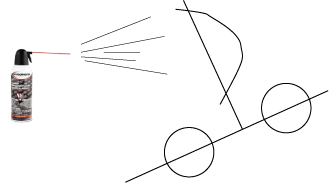
Rapid design, build and prototyping of a wheeled vehicle (out of limited materials) that is propelled by a can of compressed air.
FRAMEWORK
Working with simple materials to build a prototype is a technique employed in many product development cycles. This exercise focuses on the simple form and function of a wheeled vehicle, and provides only a can of compressed air to create movement.
THE ASSIGNMENT
Build a set of functional requirements such as number of wheels, sails, size, etc. Then render a drawn design of the proposed vehicle. Next, build the vehicle and engineer as needed within the time limit. Each team will then put their vehicle through some tests.
RULES
Materials include 3 sheets of 8.5”x11.5” cardstock, three straws, a pair of scissors and a roll of Scotch tape. Each team will also receive only one can of Duster compressed air.
Teams will have 15 minutes to work on the functional requirements and drawn design.
Teams will have 30 minutes to build and engineer their vehicle prototype.
THE CHALLENGE
Speed: To cross a finish line in the shortest time.
Distance: To cover the most longitudinal distance with x seconds of compressed air.
Maneuver: Steer the vehicle around obstacles without falling over.
VARIATIONS
Provide a balloon for propulsion (speed or distance challenge).
Design a watercraft.
Vehicle must carry golf ball.
Quotable: WSJ Article “How Not to Ruin a Swimming Prodigy”
Tucked away in the Sports section of the May 30, 2012 WSJ (yes, I read the Sports section of the WSJ), is an article by Matthew Futterman about one coach’s successful style which incorporates adaptation in order to maintain an element of fun in practice. In the end, the element of fun extends the training and achieves more than if the drills were fixed. To a degree, the coach allows some elective participation but this seems to have resulted in a greater focus on the outcome. In swimming as much as in any other sport I can think of, the swimmer must come up for air and periodically think about how much more they need to put in to reach the goal. To the YCISL, this style of training with an element of fun is one I would care to embrace.
Here is some extracted text that impresses me…
As a coach, however, Schmitz stands out for a devotion to rest and play. No less important than his swimmers’ splits is whether they are having fun inside and outside the natatorium. At practice, if the kids seem spent, he’ll end the workout midway through and start a game of water polo. “He’s a fun loving kid, he laughs with them, he plays loud music,” said D.A. Franklin, Missy’s mother.
Schmitz’s swimmers also go through a structured dry land practice twice a week that focuses on building core strength and athleticism. “Looking at a black line all day, every day gets awfully dull,” he said.
Even when it comes to improving form—something other coaches regard as a strict science—Schmitz believes in the art of play. Sometimes, in fact, he orders his charges into the deep end for a session of vertical kicking, with the aim of lifting their torsos out of the water.
“A lot of this is about simply playing around in the water,” he said. “That’s what kids do naturally, and the play engages the mind and gives the swimmer the tools to figure out the right way to move their body.”
Exercise: Uses for a Pail (Multitasking Revisited)
In extension to the entry titled “Unitaskers Bad, Multitaskers Good,” I am thinking that a bucket/pail might be a great object to ponder multitasking. I have several around the house and in the garden.
One approach would be to actually bring one or more pails in. We could do the brainstorming exercise (a) with no visual identification of the object (i.e., just tell them it’s a pail), (b) with an image on a screen or piece of paper (i.e., no 3-d impression), (c) with a pail sitting at the front of the room (i.e., observe from a distance, or (d) actually have participants play with one first or during.
I am also thinking to make this an experiment where we also develop a methodology and collect data for analysis.
We would give the same exercise to individuals not in the workshop to create a reference set of ideas for usage. The reference set would be longitudinal in age, and these references would be used to compare with the results from workshop participants.

Exercise: School Rules
Briefly, the idea is a PostIt type exercise where participants brainstorm changes to the rules at school. Simple targets may be the timetable (including start and end times, lunch breaks, etc) and dress code. How about rearranging the seating style in a classroom (oftentimes in rows)? I am sure we could also examine one or two sets of school guidelines to come up with more. This exercise hopefully mixes feasibility with fantasy, and reality with possibility.
Exercise: Team Design Challenge var.1 – Chute Races
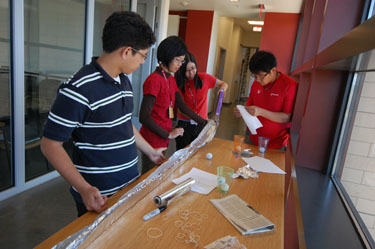
TEAM DESIGN CHALLENGE: ALUMINUM FOIL CHUTE RACES
This is partly a recount of the team design challenge from June 2011. It is also an opportunity to think why we do this exercise, and variations that are consistent with the objectives.
WHY?
To provide engaged team atmosphere.
To test team dynamics under time-constrained conditions.
To experience rapid team idea exchange, design and decision-making.
For the teambuilding lessons.
To create an impromptu structure of leadership and functional responsibilities.
To focus on blend of instant creativity and teamwork.
To work with basic (on-hand) materials.
Sometimes, when you’re given a small window of opportunity to prove or demonstrate something, you have to build that thing with just the materials at hand and with only your instinct about whether it will work. Think MacGyver. Think Top Chef Quickfire Challenge.
HOW?
Students will not be given the details of this exercise until the start of the time slot.
Time slot will be 3 hours: 15 minutes explanation, 30 minutes brainstorming and design, 1 hour construction, 1 hour set-up and execution, 15 minutes discussion.
The aim will be to design a chute using some basic materials.
Last year’s materials: aluminum foil (1 roll), elastic bands (1 box), paper clips (1 box), tape (1 roll), cup (1 ea), golf balls (4 ea), string (1 ball).
Materials are open to variation.
Examples: water instead of golf balls; chute must have Y- junction; baseball instead of golf ball; curvature (spiral, bend or mole-hill); ramp-jump; jump and land in receptacle (eg, a bucket).
Assignment: Photo Essay (Formalization)
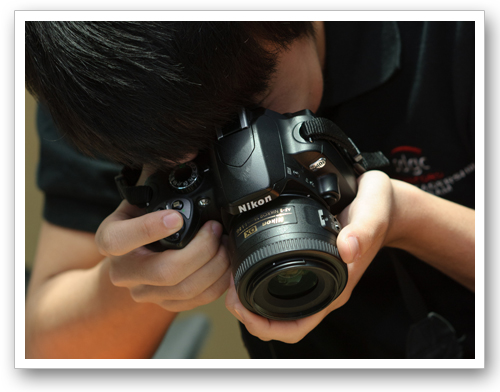
Almost a year ago, I made an entry alluding to Praveena Sridhar’s photo essay and a few ideas of what a Photo Essay assignment could be on. First, I just realized that the entry did not have specific detail on the assignment. Second, I did not elaborate on Praveena’s Photo Essay.
Here are the notes I have shared with my interns:
WHY?
Demonstrate a documentation method.
Encourage reflection.
Use photos to record things that might be missed the first time.
Long-term record.
Pictures are worth a thousand words.
Photos show perspectives.
Use photos to reflect personal viewpoint.
Taking photos is a creative exercise.
A collection of photos can be set along a theme.
A themed photo essay can be persuasive.
The theme can be “vertical” or “lateral” or perhaps both.
The product should be personal and contribute student’s personal identity “un-generic.”
Can be used as point of discussion in personal statements or interviews.
The combination of pictures and words is an effective start for future use. The words capture facts and emotions of the moment. The picture makes the overall exercise sustainable into the future
HOW?
Students will be introduced to the idea of a photo essay.
Students will be shown Praveena’s photo essay as an example. http://www.indiawaterportal.org/blog/praveena/8064
I will show two or three photo essays from last year’s group.
We will discuss the intellectual as well as emotional value of Praveena’s photo essay on Water Loss.
Students will be oriented to the photo essay assignment (separate document).
Mentors may help students develop theme ideas – using questions.
Mentors may only superficially help students with content – again, using questions.
Photo essay exhibition is intended for students to share and exchange perspectives.
Promote understanding. Minimize judging.
Exercise: 90-Second “Elevator” Pitch

I mentioned the 90-second elevator pitch idea in an earlier entry based on my reading of “The Most Awkward Meeting: New Elevators Sort Employees, Foiling Manners And Face Time” that was published in the WSJ (http://online.wsj.com/article/SB10001424052748703509104576331044032063796.html).
Here is an attempt to formalize an exercise that could fit into one of the pre-speaker “mental wake-up/warm-up” workshop slot that have been under consideration.
PURPOSE: to get students to focus on the most important points, to think on their feet, and have a sense of time when they are trying to persuade someone. They need to appreciate that they need to grab attention and that once they have it, they only have it for a short time. [Aside: this makes me think of another WSJ article (April 24, 2012 issue) I just read “What Cocktail Parties Teach Us” by Melinda Beck (http://online.wsj.com/article/SB10001424052702303459004577361850069498164.html) where the term “cocktail-party effect” is used to describe how the “auditory complex boosts some sounds to help the brain prioritize what’s important.” I’ll reflect on the significance of this in another entry but suffice it say that one needs to gain the FULL attention of the listener to have an effective pitch experience.]
1. We will do this in teams. Whether we use the Project Studio teams, or some other team formation (for variety) is up for consideration. For example, if the number of members in each Project Studio team is quite different, it might be prudent to re-sort the teams so the number of people of team is the same – mainly to make sure we have the best chance of getting through the exercise.
2. Put an assortment of products into a box – one for each participant. Each participant will draw out an item and that becomes their product (or idea) to pitch. Perhaps include an option to employ something of their own.
3. What kind of products? Junk? The hottest gadgets? Weird things? I’ll get back to you on this.
4. After selecting the item, the “pitcher” will have 15 minutes to map out their pitch. I would suggest that the pitch includes a grab, a short set of feature highlights and differentiators, why people are going to be enchanted by it, and how there is competitive advantage. Of course, the pitcher should also use visual clues to steer their pitch as needed. For example, if eye contact is not attained or is lost (looks at watch, smiles at someone else), then it might be time to jump to Plan B or the next grabber.
5. The pitch. Will need some sort of timer, probably in view of the audience but not the pitcher (or maybe both actors).
6. Feedback. The pitchee should give a quick , spontaneous and genuine response when the time is up. It could be something like “I’ll take 100!” or “Send me your business plan” or “Come to my office later and tell me more” or …
7. Maybe we should video these interactions on an iPad for later review?
