
Category: Ideas
Idea: How to Delay Obsolescence
How do you design a product or a feature which won’t go obsolete quickly? Many products today are poor copycats that look similar but do not perform well. For example, a cheap, metal soap tray will rust quickly whereas a high quality one (perhaps the original design) will last much longer. How about laptops or printer cartridges? Are manufacturers focused on future business opportunities when it comes to re-use of components and materials, rather than making re-use user-friendly?
Lesson: Using Basketball Coaching as a Teamwork Lesson
I personally know (ask my shoulder) that basketball coaching requires a lot of careful planning and precise execution. What most people probably don’t realize and I found resonating with my primary guidebook, “Coaching Girl’s Basketball” by Sandy L. Simpson (2001) is that each practice has to be customized for a team and not individuals – otherwise you are in for an unproductive and risky activity. To run a drill, you have to make sure that it will maintain interest of the group, and be teach-able and learn-able as a group. It also helps that the drill be upgradeable over the course of the season.
For the YCISL, we could assign a volunteer from each team to draw up a lesson to teach a basketball drill. For example, the volunteer instructor could research how to set up a basketball passing drill (chest pass, bounce pass, overhead pass), prepare the lesson, and actually present the lesson to the rest of the team. The instructor would get the experience of working on team dynamics to make sure there is full participation and teamwork. It might help if the instructor has some basketball experience.
This should probably be done outdoors; maybe head to a basketball court.

Exercise: Serial Progressive Brainstorming
Here’s an exercise we can use:
Divide into groups of 10 to 12 students; sit in circle. Each person starts with an sketchpad (maybe we will have a keyword in the middle). They will sketch a component (something that serves a function) or a design feature within 30 seconds. After 30 seconds, they pass the sketchpad to the next person in the circle. The next person has 30 seconds to add another component. The sketchpad has to go all the way around the circle, then the last person gets 2 minutes to look over the final sketch and then will describe what the product does.
Possible keywords:
Smart Door – a door that is interactive, user-friendly. more secure, energy-friendly (lets light in when needed), let’s air in for ventilation, emergency workers can get through without having to break it down, width-variable so large objects can through easier…
Smart Television –
Exercise: Teamwork and the Troublemaker
Idea for another exercise. Maybe start with a Dilbert cartoon.
Mark slips of paper with roles on a team. Look up roles from Leadership book.
On one slip, add a note that that person must provide conflict (disagree or question organization) or slow progress (eg, make excuses) We would then observe how the other team members react.
Scenario: the team is tasked with designing layouts for the room…eg, studying, seminar, lecturing, meeting, conference, video conference, teleconference.
Book: Uncertainty Avoidance in “Outliers”
In “Outliers” by Malcolm Gladwell, Singapore is listed as the “culture best able to tolerate ambiguity”, or the country with the lowest UNCERTAINTY AVOIDANCE. This led me to http://www.geerthofstede.nl where we find more detail about this and other cultural features (termed “cultural dimensions” when quantified on a relative scale).
Uncertainty Avoidance
Uncertainty avoidance deals with a society’s tolerance for uncertainty and ambiguity. It indicates to what extent a culture programs its members to feel either uncomfortable or comfortable in unstructured situations. Unstructured situations are novel, unknown, surprising, different from usual. Uncertainty avoiding cultures try to minimize the possibility of such situations by strict laws and rules, safety and security measures, and on the philosophical and religious level by a belief in absolute Truth: “there can only be one Truth and we have it”. People in uncertainty avoiding countries are also more emotional, and motivated by inner nervous energy. The opposite type, uncertainty accepting cultures, are more tolerant of opinions different from what they are used to; they try to have as few rules as possible, and on the philosophical and religious level they are relativist and allow many currents to flow side by side. People within these cultures are more phlegmatic and contemplative, and not expected by their environment to express emotions.
Also from the website…”Because values are acquired in childhood, national cultures are remarkably stable over time; national values change is a matter of generations. What we see changing around us, in response to changing circumstances are practices: symbols, heroes and rituals, leaving the underlying values untouched.”
In this search, I also found CultureGPS (http://www.culturegps.com) by sales-genetics (http://www.sales-genetics.com) and downloaded it onto my iPad via the App Store.
Perhaps it would be an interesting exercise to show the values of the various cultural dimensions and see if they are expected among the youth participants. It would also be interesting to see whether aiming change at youth (by youth and among youth) has greater influence on promoting a value change.
Uncertainty Avoidance, Power Distance and Individualism Values from CultureGPS Lite (listed in order; downloaded 5/4/11; no version number):
| Country | UA | PDI | IDV | Comments |
| US | 46 | 40 | 91 | high IDV; depend on yourself |
| China | 40 | 80 | 20 | |
| Malaysia | 36 | 104 | 26 | high PDI; little leadership transfer? |
| Singapore | 8 | 74 | 20 | |
| India | 40 | 77 | 48 | |
| Taiwan | 69 | 58 | 17 | |
| Japan | 92 | 54 | 46 | very high UA; follow procedure |
Idea: Another Game Adaptation Example – Boggle
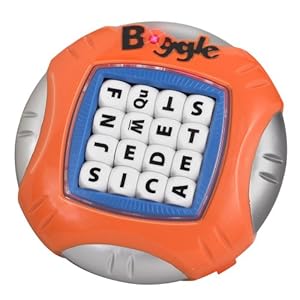
Thought of another straightforward way to adapt a game to the sustainability theme. This time using Boggle which is a game enjoyable at all ages (I hope this adaptation doesn’t take the fun out!). The idea is to create a list of words related to sustainability (or some other theme) that are worth double- or triple-points when listed in a round of Boggle. It could start with simple words such as “solar”, “water”, “recycle” or “save”. Then the list could grow. Perhaps this list could be kept on a website for download, and people could submit new words for the list over time.
PLUS: Just found an online version of Boggle! http://www.fun-with-words.com/boggle.html. Also found online variations of Boggle. And yes, there is an iOS version. However, I am not sure how this adaptation will function with an online version.
Idea: Simple Demonstration – Crossword Puzzle
I was thinking about how to put across the idea of adapting a game to a sustainability (or other) theme – for the purpose of the Project Studio. I wanted something simple to create and simple to understand; something quick to demonstrate and obvious how to expand. So, a crossword puzzle came to mind.
I could create a small crossword puzzle with just a few clues as the starting point. The students could then be challenged to create a larger grid crossword puzzle.
For a younger audience (eg, primary/elementary school), we could use a word finder puzzle format instead.
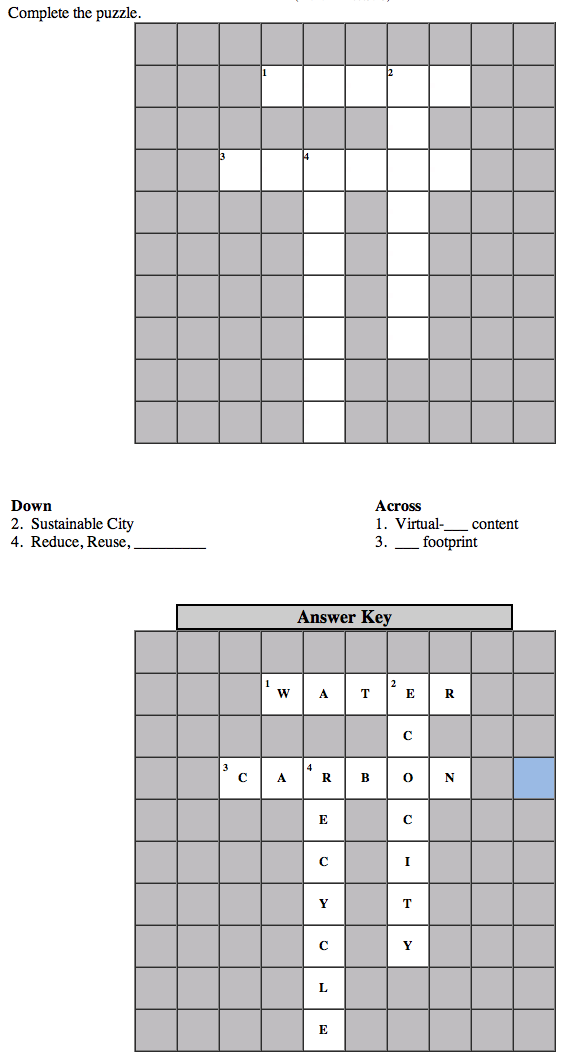
Puzzle created using Build a FREE Crossword Puzzle! at http://edhelper.com/crossword_free.htm
Tool: The IdeaPad
I really shouldn’t call this an IdeaPad since the label is used by Lenovo for its products, but it kind of fits well with what I have in mind for the creativity workshop.
The challenge would be for a participant to doodle ideas on one sheet of paper in a notepad. Each idea on the sheet could be related or unrelated. It would just be interesting to see whether a single sheet of paper is limiting or inspiring.
So for example, let’s provide each participant with a piece of art sketch paper then have them draw an object (eg, a building, maybe even specifically a hotel) then have them come up with solutions to problems commonly associated with buildings (eg, climate control).
Remember that ideas could be vertical or in-plane.
Brainstorming Aid: Using Hints
At the very least, a hint (or a “seed” might also be an appropriate term) is a useful way of providing a context from which to generate discussion and ideas. The use of hints could also be expanded to integrate multiple facets into a brainstorming exercise. The hint might be incidental (contact in an unintended manner) or purposeful (part of an agenda).
The Incidental Hint: this is more likely the case for teaching moments where spontaneous and freeform brainstorming is desired, and there is freedom to explore. We might just gather a group together, state an unexpected topic (and objective) and let everyone interact. An incidental hint, for example, might come from listening to the radio or reading a magazine.
The Purposeful Hint: in a research or business setting, there is probably a framework from which one would select a hint. For example, in order for a company to design a new product, it would be useful to know what current technologies are available (mobile devices, eg), or what the customers are asking for (pharmaceuticals, eg).
The hint contributes greater definition to an idea and is tied to a scope. A series of concurrently developed products with similar hints might constitute a product family.
Thoughts: Questions About Change
Sometimes, the best point from which to start brainstorming is with a question (other times, it might be with a problem definition). The question could be self-directed such as…
If I could change one thing at [work, home, school], it would be… Then we would probably want to add “…because…” just so we understand the motivation.
We could also make this question a little more sophisticated (maybe follow our innovation theme) and ask…
I could make [this, that] significantly better by…
The issue with self-directed questions is that they may hinge on one’s focus on personal limitations. It would be an interesting comparative exercise perhaps to also ask the question…
They could have done [this, that] better if…
Perhaps we could roll this into a quick creative exercise where one gets to critique someone else’s work as well as their own.
Here’s an idea: create a new label for a drink (I’m drinking a Tejava at the moment). OK, let’s expand on this idea. We could have a selection of beverages and each team could select one. The team would taste the beverage themselves, then brainstorm and design a new label, attaching it to the bottle. Another team, acting as a focus group would taste the beverage with the new label on it then comment on how well the new label works.
After such an exercise, we should discuss how such an understanding of labeling could be applied to a sustainability-themed product.
This might seem like a marketing exercise, but it really is about persuasion (psychology) – and psychology is really the most applicable tool in advancing sustainability (or most issues for that matter). Sometimes, sustainability isn’t a large enough issue to persuasively alter behavior (on a dominant scale) so it might have to be associated with something else (money, prestige, health, eg).
