
Category: Ideas
On the Combination of Knowledge Intelligence with Emotional Intelligence
In YCISL, we postulate that Leadership Intelligence (LI) arises from the combination of Knowledge Intelligence (KI) and Emotional Intelligence (EI). Our viewpoint is succinctly expressed by a chemical reaction:
KI + EI -> LI
In general, EI is a limited-quantity reagent which results in a low LI yield. KI is the information capital that one possesses and is largely related to formal education. EI is the ability to configure KI so that it is useful and effective. Essentially, EI bonds with KI and forms LI, a valuable product and resource.
In another article, I have discussed how EI is lost just as creativity is stifled through formal education and societal influence. So as KI grows, EI can greatly diminish. So the challenge is to protect, preserve and restore EI so that it is ready to produce LI.
This model explains why LI is rarely demonstrated in modern society and why YCISL focuses on opportunities for and examples of youth leadership; we expect to be able to yield high LI in youth and not adults. It will take high quality/purity KI as well as potent EI to produce the LI that we seek.
The hope is to ignite the production of LI at an early (prime) age so that adults have the youthful experience to sustain high LI. Overall, this helps explain why the best (adult) leaders are those who draw from their youth experience.
This is one of YCISL’s purposes.
Activity: The Thomas Interview
While YCISL emphasizes “Your Personal Story” as a theme, it may be worthwhile to develop an exercise where one develops a personal story of another person through an interview. The interview would involve questions based on a variety of YCISL topics such as “Purpose” and “Motivation.” Through such an exercise, students would learn to frame their personal story using the YCISL elements and appreciate the directions that can be taken.
Exercise: Turn It Inside Out (or Upside Down)
One of the features that makes Stanford unique is its upside down hierarchy. Think of it as a pyramid standing on its tip. At Stanford, students are at the top (Stanford is defined by its students) followed by faculty then staff and administrators. Stanford’s framework truly nurtures intrinsic motivation by empowering individuals with personal opportunities for mastery, autonomy and purpose.
So along the same lines, let’s devise an exercise by reversing/turning inside out/rearranging common frameworks. Through this exercise, we can pursue the “crazy” end of the brainstorming spectrum and identify opportunities for competitive advantage. Our aim is to strengthen how youth critically question a common framework before we consider accepting it.
In the prototype for this exercise, students will study a restaurant or cafeteria and make a list of how it functions (perhaps using one of the IDEO Method Cards). [One of the YCISL workshop projects was on a school cafeteria which operated quite differently from what I have seen myself – from a ticket machine]. Then the students will try imagineering those functions with a reversed view.
Discussion: I Tried Something New Today!
From the very beginning of YCISL, we included a “Placement” level in our Leadership Objectives framework which is shown in orientation for every YCISL workshop as well as on the CSDGC Youth Development web page. By “Placement” we mean to try different things and see which fits best – kind of like shopping for new clothes or shoes – taking into consideration practical as well as emotional factors.
Our framework says that “Placement” is a practice to start at the pre-High School level, a time where going to college or work still seems distant and hardly discussed. With my own children, we’ve tried new paths when the one they were on didn’t seem to be resonating. My daughter dropped ballet after one class. My son switched from violin to classical guitar after a couple of years. In response to parents of pre-high school students who have enquired about attending the YCISL program, I have advised them to support (encouragement as well as arranging, if needed) their children in trying new things on a regular basis. I composed and posted a white paper on this topic, positioning it as preparation for eventually attending a YCISL workshop. In this way, YCISL workshop participants will hopefully be experience-rich at the time they are in the workshop and can relate better to the myriad of personal skills – seeing how the skills could have enhanced their experience and the potential for future applications.
For our most recent workshop (March 2015), I added a slide in the context of innovation that showed “Try new things to be able to make new things.” This ties in with the feature list exercise which in turn ties into the “Your Personal Story” theme. It also ties in with finding passion, a topic to which I am paying more attention thanks to Scott Adams and his book “How to Fail at Almost Everything and Still Win Big: Kind of the Story of My Life” in which he discusses the prerequisites for passion.
I am writing this entry to precede a discussion note I will add to our YCISL LinkedIn Group page. I would like to let the students know that I tried something new today, and check whether they have tried anything new recently. Trying new things (regularly and as a matter of habit) is a soft skill central to YCISL and should be a lifelong practice.
I tried green almonds today for the first time. Someone I know picked them fresh from their tree this morning and passed them to me at the gym (Thanks, K!). I had an idea of what to expect because I had looked up green almonds on Google a few days before – and words like”crispy and “green apple” helped me prepare for what was in store. This was a fascinating learning experience because I am so accustomed to other forms of almonds (e.g., whole, sliced, slivered, milk, flavored, roasted, dried) and ways to eat them (e.g., with cereal) as well seeing the ads on tv (California is big on growing almonds).
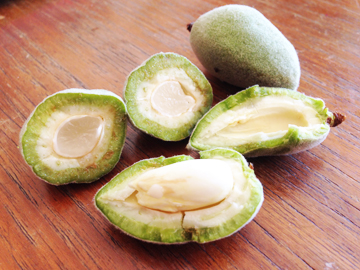
These almonds are a lot different than what I’ve had before – they’re a little fuzzy and have a “fruit” appearance. I like the fresh green color too. After biting through my first one, my attention was grabbed by the layers in the cross-section as well as the soft white complexion of the almond nut that we usually consume. As for taste, the green apple-type tartness from the hull came through clearly but moreso as perhaps an unripe green apple. I didn’t mind. I then sampled just the almond nut at the center and there was a faint milky sweetness that I appreciated.
So where does it go from here? Not every new experience will lead to something. I am considering getting an almond tree for my yard so I can grow my own green almonds. But even if it doesn’t, my growth mindset has been exercised and I am ready to try the next new thing.
What new thing have you tried today?
Exercise: A Message To My Future Self
Earlier, I had made an entry on a WSJ article titled “Revisiting Teenage Dreams” where students watched video messages to themselves that they had recorded while in high school. At that time, I compared it to the end-of-workshop videos that the YCISL participants recorded to capture the thoughts that have inspired them from their Stanford experience.
We have now implemented a new workshop exercise called “A Message To My Future Self” in which students make a video message to themselves – to be viewed 5 years later or beyond. We also created a companion exercise called “A Message To My Past Self” in which students look back and reflect in written form on advice they would give themselves; a sort of lessons learned exercise. This is all tied in under our “Your Personal Story” theme.
In the AMTMSF exercise, we provided prompts with a couple of PowerPoint slides:
1. To say at the start of the video…
hi! my name is [name]
i am from [home]
today is [date]
i am [age] years old.
this is a message to my future self.
2. Possible things to talk about…
who i hope to be.
what i hope to find.
what i hope to do.
what i hope to have.
what i hope to accomplish.
what i hope to achieve.
what i hope to be remembered for.
how i plan to get there.
As with all YCISL exercises, we hope that all students will think more deeply over time about the thoughts raised by this exercise. Some of the students were able to be very thoughtful despite the short preparation time, whereas others could not put themselves in the necessary frame of mind. As we continue this exercise, I hope to find common threads that we can engrain into the YCISL program to encourage more consideration and discussion.
Emotional Intelligence Lost?
One of the base premises of the YCISL program is that creativity is stifled in youth (Ken Robinson’s posit) and that restoration of creativity is perhaps the largest challenge in pursuing and finding fulfillment in life. I am wondering whether emotional intelligence is in a similar predicament. Like creativity, could it be that people lose significant emotional intelligence by adulthood (assuming there is some base presence in early childhood)? However, the EI loss may be due more to atrophy than fear. The YCISL approach is therefore to develop and share exercises which condition and strengthen both creativity and emotional intelligence.
Where can we observe an absence of EI? The example I will pick on today is the automobile (there are many other places I am sure come to your mind as well).
1. I will start off with what I saw today that led me to write this entry. Smoking a cigarette while driving. In so many ways, this demonstrates low EI. If a smoker tries to use EI, he/she clearly would not be doing it while driving. It negatively affects self and social, and in both the awareness and management dimensions.
2. Then there are those who choose to load/unload on the traffic side of a car. Especially when this involves children, there is a complete lack of personal and social EI.
3. Then there are speeders, tailgaters and red light runners.
4. An EMT favorite are those who choose to groom themselves while driving.
5. A less clear example are drunk/drugged drivers. Does intoxication temporarily impact EI or does low EI lead to likelihood of getting intoxicated?
So let’s try to recognize low EI and make an effort to strengthen it in ourselves. Combine it with knowledge intelligence (KI) and experience the feeling of leadership.

Game/Activity: The Pocket Search & Life’s Journey
Main idea: In life, we search for things and if we are narrowly focused at the time, we pass by many things without much notice if any at all. This exercise is intended to encourage reflection when our mind is searching for something. It is intended to touch on times of failure/emptiness, distraction, incidents and success/goal-reaching.
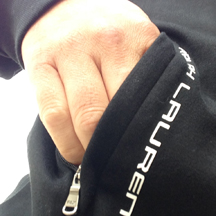
This exercise involves placing items in the pockets of a piece of clothing – the more pockets and more types of pockets (front, back, zippered, etc), the better. Another person is told to find a particular item which is in one of the pockets. For each pocket searched, the second person must take a moment to capture their feelings/emotions. The range of results could be:
(1) finding the item on the first look…was this luck or fate? What might happen when you try again with another piece of clothing? Could you repeat the success on the first try?
(2) the item in the pocket searched was not the item being sought after…how do you value the item that was found? Do you disregard it and keep looking for the item you are supposed to find? Or do you think about how it might be useful in another context? Or do you think about changing what you want to search for?
(3) finding the item after looking through two or more pockets…do you feel validated? Did you feel that maintaining hope was at your core? Did you become more or less optimistic with each pocket you had to search? What satisfaction did you feel when you found the item? Do you remember the moment you found the item or the sequence of moments that led up to the discovery?
(4) finding nothing in the pocket (empty pocket)…is there a feeling of hope because you eliminated one of the pockets or is there a feeling of emptiness? How eager are you to move on the next pocket? How is your positive mindset?
Since this is still in the experimental design stage, expect there to be better ways to tie in with the YCISL program. At this point, it seems that this activity provides a framework onto which we can attach a variety of life lesson reflective questions. Note to self: establish positive mindset before starting the activity.
Material list:
One article of clothing with many pockets (e.g., jacket, five-pocket jeans especially with zippered pockets)
Assortment of articles (the more obtuse, the better for diversion purposes)
Journal for reflection
Chosun Ilbo: High-Schoolers Say Money Key to Happiness

I have recently been developing an interest in South Korean culture especially how it might relate to the YCISL principles. Thinking back, there was a Time magazine article (“Teacher, Leave Those Kids Alone” by Amanda Ripley) from 2011 that first pulled my attention to the life a South Korean student might have; it was about the influence of hagwons (after-school tutoring programs). Around the same time, I was in discussion with an organizer to bring a group of South Korean high school students for a YCISL workshop. More recently, I entered some thoughts on the mindset of Ku Hye-sun (구혜선) and how it relates to the YCISL model.
The article discussed here is “High-Schoolers Say Money Key to Happiness” (no author attributed) published on The Chosun Ilbo website on June 6, 2014 (http://english.chosun.com/site/data/html_dir/2014/06/06/2014060600493.html). The title ties in well with YCISL’s focus on high school and happiness, but the article also cites data for elementary and middle school students. The article describes the results of a poll of 6,946 students on the most important factor for happiness (let’s assume this question was posed as pertaining to personal happiness):
Elementary School Students: Harmony in the family 43.6%, Good health 20.6%, Freedom 13%
Middle School Students: Harmony at home 23.5%, Good grades 15.4%
High School Students: Money 19.2%, Good grades 18.7%, Harmony in the family 17.5%, Freedom 13%
I feel that these results are a reflection of the strong shared family values in Korea and perhaps also the result of the practical “fear” mindset that takes hold as youth get older. The encouraging side is that the younger students held “harmony” highest which sets up the challenge as one of preservation as opposed to substitution (similar to how we wish to preserve creativity in youth in YCISL). It would be interesting to also know whether “Money” stays a top factor (or even stands out more) to happiness into tertiary education ages and beyond. Then again, the idea of money leading to happiness is not unique to South Korea. It is also a major perception problem in the US and other countries; the family or societal pressure might be different, but the message is still the same.
Let’s also consider information from OECD PISA on student happiness. Referring to Figure III.1.2 on page 32 of “PISA 2012 Results: Ready to Learn (Volume III): Students’ Engagement, Drive and Self-Beliefs” (DOI:10.1787/9789264201170-5-en), we find that Korea (let’s assume South Korea) ranks lowest out of 65 participating countries at just below 60% on this chart of “Percentage of students who report being happy at school.” [For context, note that PISA participants are between the ages of 15 years 3 months and 16 years 2 months, and the chart totals the students who answered “Agree” or “Strongly Agree” to the statement “I feel happy at school.”] Is this surprising? Not really because I think Koreans are very honest with their familial emotions and are not “happy” because they have less time to be in “harmony” with the family – and so the data should not be construed as showing that the students are un-happy with the school, just un-happy when they are at school which deprives them of time with the family to fulfill filial needs. We can speculatively contrast this with the US which ranked just 16 spots higher at about 80% and in the below average section along with Korea. What reasons do US students have to be un-happy about school? There is likely to be a wider assortment of reasons as compared to Korea because there is less purpose emphasized about secondary school education in the US, and so the reasoning and reference standards behind answering this question is likely different. More significant to consider is whether a lack of happiness at school correlates with motivation.
Malaysia is ranked 6th and Singapore 12th on this chart – relatively high. Using my Malaysia and Singapore background, I can see how these two countries ranked relatively high. In Malaysia, pressure on school grades to get into university is only moderate (low compared to Korea, Taiwan, China, India, US, etc); so a student has opportunity to think about life and their expectations. In Singapore, anxiety about school performance is intense but there is less anxiety about life, tertiary education and career opportunities as compared to other countries.
So the lesson for me to learn here is that youth need to be coached to better understand happiness (and positivity) and to develop exercises towards this aim. This should be tied in to intrinsic motivation practices which de-emphasize the growth of money-related fears.
“Turn that frown upside down.” Let me start by thinking about the song “Happy (행복했을까)” by my latest favorite artiste Ku Hye-sun. Except for the “사랑” which I have learned from Korean dramas, I repeatedly listen to this song not for its lyrics but because of its soothing and hopeful feel. You could contrast this to the so popular “Happy” by Pharrell Williams or “Koi Suru Fortune Cookie” by AKB48. I’m not sure presently where to start on developing the practical exercise, but I have ideas on what the ingredients should be so that it has lasting flavor and healthy benefit. Let the experimental design begin!
Related Articles:
“Korean Children Unhappiest in OECD Despite Material Wealth” (no author attributed) published on The Chosun Ilbo web site on May 7, 2012 (http://english.chosun.com/site/data/html_dir/2012/05/07/2012050700775.html)
“An Assault Upon Our Children: South Korea’s Education System Hurts Students” by Se-Woong Koo published on The New York Times web site on August 1, 2014http://www.nytimes.com/2014/08/02/opinion/sunday/south-koreas-education-system-hurts-students.html?_r=0)
“Korean students least happy in OECD” by Lee-Hyo-sik published on The Korea Times web site on May 4, 2011 (http://www.koreatimes.co.kr/www/news/nation/2011/05/113_86432.html)
“Poll: Are Singaporeans least happy?” by Alexandra Hoegberg published on the CNN web site on December 21, 2012 (http://edition.cnn.com/2012/12/21/world/asia/singapore-least-happy/).
Straits Times: Prolonged use of mobile phones bad for school test scores: Japan study
Saving this article as a potential discussion point for problem identification. May be particularly appropriate for our students from Japan, but there may be a problem-adaptation opportunity for students from another country.
http://www.straitstimes.com/news/asia/east-asia/story/mobile-use-bad-school-test-scores-japan-study-20140826
This would be an opportunity in YCISL workshops to practice:
– empathy
– turning a problem into an opportunity
– agreeing or disagreeing with an adult view
– brainstorming
– prototyping
– developing an elevator pitch (e.g., to encourage youth to use smartphone more smartly)
– using youth as an advantage (smaller age gap)
Creativity Exercise: Composing the next installment
This is an idea to include an exercise where students compose a followup to a story. This exercise would involve imagination, creativity, active listening, storytelling and growth mindset elements. It is a YCISL workshop variation on improvisation such as one can view on the television show “Whose Line Is It Anyway?”
There are several ways that this exercise could be set up:
1. Use a passage from a book. Good starts might be a mystery that reveals a setting at the start. Another might be from a biographical story where life path choices need to be made.
2. Have students tell a part of their personal story and others would compose a story about how the future turned out.
3. Create a Mad Libs type of passage and have students fill in the blanks. Then the students would have to continue the passage using the context created by the Mad Libs part of the exercise.
4. Use a cartoon strip and blank out the last frame. Have students create that frame on their own.
Option: this could also be made to be a PostIt brainstorming (divergent thinking) exercise with participants coming up with as many continuations to the story as they can.
