
Category: Lessons
Exercise: Turn It Inside Out (or Upside Down)
One of the features that makes Stanford unique is its upside down hierarchy. Think of it as a pyramid standing on its tip. At Stanford, students are at the top (Stanford is defined by its students) followed by faculty then staff and administrators. Stanford’s framework truly nurtures intrinsic motivation by empowering individuals with personal opportunities for mastery, autonomy and purpose.
So along the same lines, let’s devise an exercise by reversing/turning inside out/rearranging common frameworks. Through this exercise, we can pursue the “crazy” end of the brainstorming spectrum and identify opportunities for competitive advantage. Our aim is to strengthen how youth critically question a common framework before we consider accepting it.
In the prototype for this exercise, students will study a restaurant or cafeteria and make a list of how it functions (perhaps using one of the IDEO Method Cards). [One of the YCISL workshop projects was on a school cafeteria which operated quite differently from what I have seen myself – from a ticket machine]. Then the students will try imagineering those functions with a reversed view.
Discussion: I Tried Something New Today!
From the very beginning of YCISL, we included a “Placement” level in our Leadership Objectives framework which is shown in orientation for every YCISL workshop as well as on the CSDGC Youth Development web page. By “Placement” we mean to try different things and see which fits best – kind of like shopping for new clothes or shoes – taking into consideration practical as well as emotional factors.
Our framework says that “Placement” is a practice to start at the pre-High School level, a time where going to college or work still seems distant and hardly discussed. With my own children, we’ve tried new paths when the one they were on didn’t seem to be resonating. My daughter dropped ballet after one class. My son switched from violin to classical guitar after a couple of years. In response to parents of pre-high school students who have enquired about attending the YCISL program, I have advised them to support (encouragement as well as arranging, if needed) their children in trying new things on a regular basis. I composed and posted a white paper on this topic, positioning it as preparation for eventually attending a YCISL workshop. In this way, YCISL workshop participants will hopefully be experience-rich at the time they are in the workshop and can relate better to the myriad of personal skills – seeing how the skills could have enhanced their experience and the potential for future applications.
For our most recent workshop (March 2015), I added a slide in the context of innovation that showed “Try new things to be able to make new things.” This ties in with the feature list exercise which in turn ties into the “Your Personal Story” theme. It also ties in with finding passion, a topic to which I am paying more attention thanks to Scott Adams and his book “How to Fail at Almost Everything and Still Win Big: Kind of the Story of My Life” in which he discusses the prerequisites for passion.
I am writing this entry to precede a discussion note I will add to our YCISL LinkedIn Group page. I would like to let the students know that I tried something new today, and check whether they have tried anything new recently. Trying new things (regularly and as a matter of habit) is a soft skill central to YCISL and should be a lifelong practice.
I tried green almonds today for the first time. Someone I know picked them fresh from their tree this morning and passed them to me at the gym (Thanks, K!). I had an idea of what to expect because I had looked up green almonds on Google a few days before – and words like”crispy and “green apple” helped me prepare for what was in store. This was a fascinating learning experience because I am so accustomed to other forms of almonds (e.g., whole, sliced, slivered, milk, flavored, roasted, dried) and ways to eat them (e.g., with cereal) as well seeing the ads on tv (California is big on growing almonds).

These almonds are a lot different than what I’ve had before – they’re a little fuzzy and have a “fruit” appearance. I like the fresh green color too. After biting through my first one, my attention was grabbed by the layers in the cross-section as well as the soft white complexion of the almond nut that we usually consume. As for taste, the green apple-type tartness from the hull came through clearly but moreso as perhaps an unripe green apple. I didn’t mind. I then sampled just the almond nut at the center and there was a faint milky sweetness that I appreciated.
So where does it go from here? Not every new experience will lead to something. I am considering getting an almond tree for my yard so I can grow my own green almonds. But even if it doesn’t, my growth mindset has been exercised and I am ready to try the next new thing.
What new thing have you tried today?
Game/Activity: The Pocket Search & Life’s Journey
Main idea: In life, we search for things and if we are narrowly focused at the time, we pass by many things without much notice if any at all. This exercise is intended to encourage reflection when our mind is searching for something. It is intended to touch on times of failure/emptiness, distraction, incidents and success/goal-reaching.
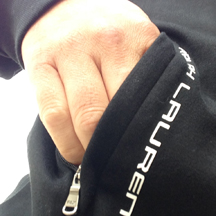
This exercise involves placing items in the pockets of a piece of clothing – the more pockets and more types of pockets (front, back, zippered, etc), the better. Another person is told to find a particular item which is in one of the pockets. For each pocket searched, the second person must take a moment to capture their feelings/emotions. The range of results could be:
(1) finding the item on the first look…was this luck or fate? What might happen when you try again with another piece of clothing? Could you repeat the success on the first try?
(2) the item in the pocket searched was not the item being sought after…how do you value the item that was found? Do you disregard it and keep looking for the item you are supposed to find? Or do you think about how it might be useful in another context? Or do you think about changing what you want to search for?
(3) finding the item after looking through two or more pockets…do you feel validated? Did you feel that maintaining hope was at your core? Did you become more or less optimistic with each pocket you had to search? What satisfaction did you feel when you found the item? Do you remember the moment you found the item or the sequence of moments that led up to the discovery?
(4) finding nothing in the pocket (empty pocket)…is there a feeling of hope because you eliminated one of the pockets or is there a feeling of emptiness? How eager are you to move on the next pocket? How is your positive mindset?
Since this is still in the experimental design stage, expect there to be better ways to tie in with the YCISL program. At this point, it seems that this activity provides a framework onto which we can attach a variety of life lesson reflective questions. Note to self: establish positive mindset before starting the activity.
Material list:
One article of clothing with many pockets (e.g., jacket, five-pocket jeans especially with zippered pockets)
Assortment of articles (the more obtuse, the better for diversion purposes)
Journal for reflection
Creativity Exercise: Composing the next installment
This is an idea to include an exercise where students compose a followup to a story. This exercise would involve imagination, creativity, active listening, storytelling and growth mindset elements. It is a YCISL workshop variation on improvisation such as one can view on the television show “Whose Line Is It Anyway?”
There are several ways that this exercise could be set up:
1. Use a passage from a book. Good starts might be a mystery that reveals a setting at the start. Another might be from a biographical story where life path choices need to be made.
2. Have students tell a part of their personal story and others would compose a story about how the future turned out.
3. Create a Mad Libs type of passage and have students fill in the blanks. Then the students would have to continue the passage using the context created by the Mad Libs part of the exercise.
4. Use a cartoon strip and blank out the last frame. Have students create that frame on their own.
Option: this could also be made to be a PostIt brainstorming (divergent thinking) exercise with participants coming up with as many continuations to the story as they can.
Training: Problem-Solution Attributes
From this summer’s youth workshops, I learned to appreciate more the connection between problems and their solutions. Specifically, I learned to appreciate “attributes”, a term used by one of our docents at the Cantor Arts Center when she was asking students to look for visual clues in artwork.
A new skill that we will incorporate into our 2015 workshops is problem definition and problem statement development (it is a project rate-limiting step that takes a while to activate). For our training approach, we will use a reverse (people usually think of a problem first then the solution) thinking method where we choose a solution (they’re all around) then work out the problem they were intended to solve.
1. Look around you and pick an object to observe closely.*
2. What are its attributes? Think of both its forms and functions. Think of how you interact with it.
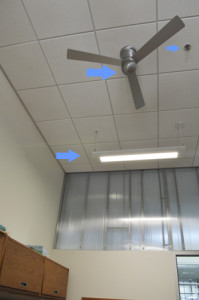
3. Describe the problem that this solution addresses. Remember that this is a trained skill so initially the thoughts may be slow to form, but we still want to use our creative thinking so do this step fast – within 30-60 seconds.
Repeat these steps as part of your training. Increase the detail of your problem description gradually – without becoming complex. You can develop scoping as well as depth skills. Apply your EQ as well so that others can empathize with the problem.
Bottom line: Practice this regularly. It should take no more than 3 minutes each time. Eventually you will understand how to form an effective problem statement by observing a problem that needs to be solved.
*Need a hint to get started? Pick something on you or in your pockets. Or look in your bag/briefcase. For something more challenging, choose something that you probably see often in passing but don’t really think much about it.
ACTIVITY: Filtering at the Early Prototyping Stage
Prototyping is the second stage of the YCISL simple innovation framework. In this stage, you select some of the best candidates from the brainstorming stage and try to construct simple models or simulations of the select ideas in order to quickly identify weaknesses, challenges and problems associated with each of the prototyping candidates. This is in line with the “Fail early, fail fast” mindset we apply in our workshops. The aim is to advance just one of the prototyping candidates to the engineering level.
However, this is also a good time to document the main advantages of each of the prototyping candidates as well. The potential distance and impact of each prototype candidate are valuable considerations and will help maintain a positive mindset as development continues. Therefore, a technique for early prototyping is proposed where the positive aspects (“praises”) and negative aspects (“criticisms”) are extracted and sorted into their respective boxes. For prototyping, we are usually looking for prospective showstoppers, dead-ends and oopsie daisies! These will be dropped into the CRITICISMS box but this box will also contain the lesser risk and lower severity issues – and this whole box should be saved for later in the testing and readiness stages. This late engineering stage will be where the user guide and other “accident avoidance” strategies will be developed to steer the user away from or around known issues – or fixes could be developed if there is an opportunity.
The other aspect of the PRAISES-CRITICISMS filtering is the collection of the positive aspects (“motivators”) which move the work forward. Prioritization is needed for this box but comparative analysis of the PRAISES box for each prototyping candidate will help provide guidance on the risk-benefit and competitive advantage. The PRAISES BOX can be used in the mid-prototyping stage where the team can evaluate how fantastic a feature can be (e.g., battery life which could be good, better and wow!) Remember that the aim of prototyping is to find the most compelling product to solve the problem and invest the most resources in getting the product to be successful and displacing existing alternatives.
In sum, a PRAISES-CRITICISMS filter is recommended in early prototyping to help weight the benefits of advancing prototyping candidates, set the criteria for early failure and build a bank for late engineering testing and readiness.

Exercise: Teamwork & Self-Training
In my workshops, I describe the process I learned to coach the basketball free throw. I use it to frame the workshop goals where I aim to coach techniques and mindsets, and encourage “players” to practice on their own to get ready for the game. In this process, there’s the setup first, followed by the action then the endpoint check; this is how each component of the workshop is delivered.
As a teamwork exercise for the workshop, I am thinking we could have a team free throw contest but allow a period of time for the team to work on their free throwing skills first. The idea is for those who feel they have the better shooting skill to coach others. This will require team leadership as well as coaching skills. Group dynamics will likely also be a factor.
The simple contest will be to see how many shots a team can make in an allotted amount of time (this could vary as well). We could have one or two setups (I am thinking of getting indoor mini hoops with foam balls but we could just as easily do this outdoors with real basketballs on a regular basketball court).
Exercise: A Training Regimen for Positive Thinking
In YCISL, we view positive thinking as a requirement in creativity, innovation and great leadership. In our workshops, we watch and discuss Shawn Achor’s TED Talk “The happy secret to better work” (introduced to me by mentor Navid). I also present lessons I learned about smiling from Guy Kawasaki’s book “Enchantment” and the WSJ article “Stress-Busting Smiles.”
From the discussion in “Enchantment,” we can learn to detect the authenticity of a smile on others by crow’s feet. Conversely, we can learn to feel our own smile authenticity. A simple exercise to practice oneself is to associate the “scrunching” of the orbicularis oculi muscle with turning on a (highly) positive mindset. Practice this regularly and see if you can condition yourself to activate your own positivity with the act of a real smile. At the start, perhaps you might need a visual or audio aid that will help you get in the positive mindset, but train yourself to eventually get to the positive state with just your thoughts. A variation on this would be to start off by putting yourself in a mindful or meditative state, then go for repetitions (mindful-positive-mindful-positive-etc) and sets just as if you were working out with weights.
The next level up may be to train yourself to find the positive disposition despite a mixed field of positive and negative stimuli – a real world situation where sometimes the negative drown out the positives or the negative sticks better. The aim of this exercise will be to expose oneself to the mixed stimuli array and be able to filter out the negative so that only the positive remain. For example, if you are leading a team, could you look past all the problems and identify things which are working? Here are a few variations on a drill with this aim in mind:
– Pick a restaurant (or some other business) listed on Yelp. Read the reviews with the mindset that you are going to dine at this restaurant. Make only one pass through the reviews. When you are done reading the reviews, can you list 5 positive things about the restaurant? Could you compose a justification for going to this restaurant? Are you able to block out the negative comments?
– Read a newspaper or listen to an evening news broadcast. Can you make a list of the positive news that was covered?
– Observe how a person is dressed and make mental notes. When the person is gone and out of sight, can you list 5 positive thoughts about what you saw? Variations on this could be how a person spoke or how they performed (e.g., music or sports).
– Go to a restaurant (or any store). After you’re done at the restaurant, can you list 5 good things about the experience?
– After a week of school or work, can you list 5 things that went well or made you feel good?
When you feel you have started to master being able to focus on the positive aspects, try extending your lists so that you can exhaustively include all the positives. Vary the time horizons too – the last one in the list is over a time period of one week and the others are over a few minutes to about an hour. Feel free to customize as well to suit what is going on around you or what you regularly encounter. Try doing this in a quiet place to start (e.g. your room) then try to do it in a busy place (e.g., at a sports event). I recommend mostly training yourself in a quiet place. If you want to make it a competitive challenge, do the drill together with another person and see whose positivity is more focused.
I intend to develop a YCISL workshop module that uses the Yelp setting. Yelp is replete with low-value negative compositions – that is the natural bias – and it takes focus and skill to find the positive comments worth remembering and acting upon. Similar situation with the news which generally feeds on a bad news bias. And for both of these, there is no shortage in the supply of material to sort through.
Remember that the aim is to train yourself to strengthen and more quickly activate your positive thinking mindset. Such things take time so don’t rush it. Understand the purpose, direct yourself and sense the mastery developing within you (yes, I’m trying to get you intrinsically motivated!) With a developed positive mindset, we hope that your decision making and strategizing leadership skills will shine. Your innovation process will also make more progress as a successful innovation result comes from doting on the positive attributes, not the negative ones.
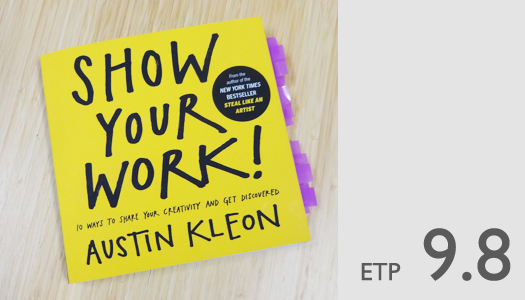
BOOK: Show Your Work by Austin Kleon
Highly recommended book. Watch his TED Talk too.
This is one type of book I very much enjoy to read. Very much to the point with touches of personal revelation. What makes it a great read is the resonation of ideas – there’s no mire of detail (or a need for it) to justify the points he makes. It’s essentially a list of life lessons he feels worth sharing and presents in a takeaway message format. I am going to try to fit several of the things I learned from this book into the YCISL workshop. Note that I also have his book “Steal Like an Artist” and expect I will learn more useful things from that.
Remember that quite a bit of YCISL comes from self-help writings aimed at adults and I try to transfer to a youth context. Here are some of my favorite parts of the book that work with the YCISL program…
– THINK PROCESS, NOT PRODUCT. This is his chapter 2 title and it coincides exactly with how I coach innovation – train for innovation as a process (way of doing things) and not as a product (an outcome that may or may not happen).
–Become a Documentarian of What You Do. In this section, he writes “Write your thoughts down in a notebook, or speak them into an audio recorder. Keep a scrapbook. Take a lot of photographs of your work at different stages in your process.” In YCISL, we promote these ideas through our photo essay and personal journal activities.
–Always be sure to run everything you share with others through The “So What?” Test. I think this is good advice EXCEPT during brainstorming. In brainstorming, treat all ideas as equal and let them all out. It’s like the voice drills of ridiculous noises one might make before singing or making a speech (yes, I’m thinking High School Musical). But get that “So What?” filter running in all the other processes. Use it in prototyping to find the tracks you may want to run on. Use it in testing to empathize with users and anyone else who will be in contact with your product. I will also add that you should use it in user support.
–Every client presentation, every personal essay, every cover letter, every fund-raising request––they’re all pitches. In YCISL, we follow this perspective through our “Your Personal Story” and elevator pitch activities. Not only is there a lot of possible uses for pitches, there is a lesson about readiness and anticipation, an elevated (and hopefully excited) state for ideas and work. In this state, it is waiting for the opportunity to become part of a longer chain of events.
–Teaching people doesn’t subtract value from what you do, it actually adds to it. Teaching doesn’t have to be a career. In a creativity and innovation context, teaching is the core of leadership. It is part of a growth mindset.
– Yet a life of creativity is all about change––moving forward, taking chances, exploring new frontiers. Change isn’t always about moving forward but it is about being willing to be agile and applying divergent thinking to complement logical deductive convergent reasoning. Sometimes, you have to retreat a little to find a strong base (think lessons from Jeff Raskin about citation). Sometimes, you have to look left and right before crossing. And occasionally look behind you. Also, remember the movement pattern within the exploration section of the Gamestorming framework.
Note too that the style of this writing is worth promoting as a YCISL Your Personal Story style in that the personal story is interwoven with snippets from other personal stories.
Viewing Education as a Parent
One of the things that I am able to do is look at education from more perspectives and with more experience than most people. I have been in an educational setting for all but a few years of my life – as a student and an educator. I would also add the perspective I gained as a science fair judge. I also have been viewing education from an involved parent perspective – all the way from pre-school to university. Pulling together my thoughts on education has been one of the main drivers for me developing the YCISL. In this entry, I form a compare and contrast perspective on education.
Like most things, education is average and that is what it aims for. In a broad generality, educational quality seems to be stretched out along a gaussian distribution with a peak mostly around the middle (I am not stating this as a fact, more of a likelihood based on personal observation). And I am not referring to just the US educational system but inclusive of all education around the world. If one isolated just the US, I would also guess that it would have its own gaussian distribution (i.e., bell curve too but perhaps shifted along the x-scale).
An interesting dynamic though is that the distribution isn’t just ordinarily diffusive with socioeconomic forces at play, but there are temporary forces that push the quality up and down. One current up-pushing force is the budding growth of online content providing supplementary learning and reinforcement opportunities; this force will continue as we try to figure out how to make it better and format it for better learning. One down-pushing force is the emphasis on flat standards.
