
Category: Lessons
Basic Thinking Question: What are _____ going to look like in x years?
One of the basic questions one could pose to stimulate brainstorming and critical thinking is…
“What is [name your product/thing] join to look like in x years?” The answer could be in terms of form or function or both.
This question is related to another that I would like workshop participants to ask themselves…
“Where do you see yourself in x years?”
For the purpose of sharing insight in the workshop setting, the “product/thing” question would likely be more fun and participants may be more open to sharing thoughts.
So, for example, one could open conversation by asking “What are the streets in your city going to look like in 10 years?” I thought of this question because of the several instances that I am familiar where dirt roads have become busy thoroughfares. For those who experience “dirt roads” presently, I am wondering whether they can imagine traffic lights, pedestrian crossings, street lights, good drainage, no pot holes, cat eye reflectors, handicap accessible curb ramps (including those bumpy pads) pedestrian walk/don’t walk lights, walk chirping sounds, and so on (there are so many amazing things about cutting edge streets these days). Even the transformation to LED traffic lights has been quite amazing. Even if the participant lives in an area where the streets already have these features, what else could be done?
For the YCISL workshop, the question I would ask would have the students think about it for 24 hours, perhaps make it part of the photo blog exercise and look around the Stanford campus or elsewhere.
Perhaps, it could something simple like “staircases” (and they could look around various buildings on campus) or “windows.” On the personal product side, we could do digital cameras or personal computers.
Idea: Build-a-Store Brainstorming Project
The following could be done as a rapid-fire 1-hour brainstorming assignment.
A group of students would be asked to design a store (and this is the only requirement) for KIDS.
Originally, I was thinking about a Toy store but have each group discuss about stretching and staying within this scope. For example, a Toy store might sell what mainstream consumers might consider toys, or they could have collector’s toys, or just a subset of the Toy realm (eg, BoardGames, or Video Games) – or they could have magazines/comics on top of toys – if they think that is what would “drive” kids to their store.
The subsequent idea is to design any store so long as the appeal is to KIDS. Preferably, the store would be something that could be set up at their school – either as something that would open regularly (eg, daily, weekly or monthly) or just once a year (eg, something for the holidays or a school event).
Some of the things that they would brainstorm and pull together are:
(1) Scope of the store – customers (eg, age and male/female/both) and type of goods/wares/services
(2) Sample of actual items they would want to sell
(3) Purpose of having the store
(4) Positioning of the store (how it fits into the proprietors or school’s goals); uniqueness and appeal
(5) Look of the store – design a storefront (real or virtual)
(6) Name of the store, design a logo and create a slogan
(7) Plans for growth and sustaining interest
Since this is just a brainstorming (dreaming) exercise, we would not discuss logistics. The intention of this exercise is for students to express their dreams without substantial practical consideration.
Exercise: Prototyping with Lego
I am thinking it may be possible (and fun) to reproduce the iPod prototype unveiling experience described in Chapter 30 of “Steve Jobs” by Walter Isaacson. Fadell had designed 3 prototype models whose purpose was for Steve Jobs to inspect (for look and feel, as well as features). Fadell put what he considered the top candidate under a bowl (hidden from view). The presentation started with a layout of the components and then assembling them to show the various ways they could or would go together.
At this point, the book does mention Lego blocks which is something that has previously been used in the YCISL workshop.
The story continues with the unveiling of the #2 and #3 prototype models. Since the actual models were carved from styrofoam, there wasn’t any operational functionality (ie, no “click and feel”) but the creative concept could be considered. In fact, it was probably critical to the iPod’s success that engineering was not considered at this stage. There was a little bit of brainstorming with what-if? thinking as they considered modifications to the models. When the #1 prototype model was un-hidden [important so that it would not attract too much early attention], it seemed that it addressed the creative energy that they had experienced just moments before, and there was instantaneous agreement about the direction to take.
We could do this as a YCISL exercise. Students could build a series of optional base models [selected from the sandboxing phase] and build models using Lego pieces. The exercise would then involve prototyping for look and feel, and the packaged feature set. We would then need one group of students to present their prototypes and another group to be the audience. We would do the what-if? so presenters and presentees have their views in the open. Then the members of the audience would select the best candidate. We could then have a discussion about the presentation, the chosen prototype and whether they felt they could move forward or had to trace back.


Michelle Kaufmann Studio
I looked up Michelle Kaufmann because she and her work was mentioned in a Seth Godin TEDTalk. Actually, it was the photo of a home designed by her (or her firm) in Godin’s slide set that caught my eye and moved me to Google her. The Michelle Kaufmann Studio home page opens with the (vision) statement “Sustainability isn’t just about the way we build. It is a state of mind. Good design embodies, inspires and nurtures that way of thinking and living.”
Especially useful to the sustainability theme of the YCISL are the “Eco Principles” at http://michellekaufmann.com/category/green-living/eco-principles-green-living/ which include:
EcoPrinciple One: Thoughtful Design
EcoPrinciple Two: Efficient Materials
EcoPrinciple Three: Energy Conservation
EcoPrinciple Four: Water Efficiency
EcoPrinciple Five: Healthy Spaces
EcoPrinciple Six: Systems Built

Book: Understanding Other People by Beverly D. Flaxington
Just finished reading the book “Understanding Other People: The Five Secrets to Human Behavior” by Beverly D. Flaxington. The byline on the front cover says “How to stop being frustrated by the actions of others and start taking charge of your own life – and reactions.” It seemed like a promising resource with potential lessons for youth, especially those who may be encountering significant adult pressure. Can you imagine a youth trying to communicate with their parents or teachers, but having to deal with the “filters” described in this book? (Note: I think “filter” is not the best term since it implies a consistent loss of information processing whereas I feel it may be more a matter of translation or interpretation fidelity/efficiency at play). The premises from this book are:
1. It’s All About Me. To be able to view things from different perspectives is very important, especially with regards to innovation and leadership. However, there are times when “me” is an essential motivator and the “me” (or “us”) perspective matters the most.
2. Behavioral Styles Come Between Us. Recognition of behavioral styles is essential in any new situation. In a negotiating or mission critical scenario, it may be necessary to put aside prejudice against a certain behavior type; but an appreciation for behavior compatibility is crucial for healthy and productive teams.
3. Values Speak Louder. Values tend to intangible and difficult to identify accurately. Therefore, some latitude or additional data to analyze may be necessary before trying to rationalize a reason for a conflict. A values difference is quite easy to imagine as being an impediment in a youth-adult situation. Even if the youth has role models, it is difficult to list accurately the values that are being adopted.
4. Don’t Assume I Know What You Mean. Youth may be so anxious about being in the presence of adults that they don’t invest much time in setting context. They either want to get the encounter over with as quick as possible because of shyness/fear, or they want to get back to their friends or something they would rather be doing. It may therefore fall on the adult to encourage the youth to provide context.
5. I’m Okay; You Are Most Definitely NOT Okay. This is perfect advice for the adult who is interacting with youth. Critical judgement is definitely not the right message to send to youth when they are making their best effort. Makes me think about the frame of mind judges in a Science Fair should be in (they’ve already invested much of their time into the project before presentation day).
For the YCISL program, I think the above premises can be used to design an exercise (to be described later) to help youth become more confident in asking questions (a skill that should be nurtured as early in life as intelligently possible, but as we know often gets suppressed in school and at home ). Skilled question-asking is a powerful mode of communication and enables highly interactive discussions. Questions allow leeway in interpretation and (in network-speak) error-checking, and promote interaction continuity. It also has utility in innovation and leadership.
http://www.understandingotherpeople.com

Sunni Brown: Doodlers, Unite! (TED Talk 2011)
Just watched the TED Talk video by Sunni Brown (one of the authors of the book “Gamestorming”) about the benefits of doodling. They key point is that it helps retention and promotes creative thinking. According to Brown, this is an instinct that gets suppressed with age (social pressure) – sound familiar? This somewhat relates to the face-sketching and Lego Design-Build exercises we already have, but I think we could come up with a true doodling exercise to fit into our YCISL program. Specifically, we should encourage students to doodle (sketch) while listening to something (possibly unrelated). One idea is to have them doodle while listening to a TED Talk video. I would like to have them possibly sketch a map of their Stanford tour, then while listening to something else have them doodle on their map – in the hopes of creative embellishment of the map.
TED Talk Video: http://www.ted.com/talks/sunni_brown.html
Sunni Brown web site: http://sunnibrown.com/
Lessons Learned: Singapore Polytechnic YCISL 2011
“This is just the beginning.” This is how I started the first meeting in the Stanford classroom for the group of YCISL students from Singapore Polytechnic. It was the beginning of their Stanford experience, of course, but it was also the beginning of the CSDGC YCISL program and they were a part of it. That point of time was also the beginning of their journey towards a greater appreciation of their creativity and potential for leadership through realizing innovation projects. This journey would continue, I insisted, past the workshop end through maintaining contact and actively expanding the network of YCISL alumni for future idea exchange and discussion.
Here are some of the LARGE lessons learned (for me) from this recent workshop program (June 12-25, date of arrival to date of departure):
(1) Conversation is a primary objective.
(2) Buried with creativity may also be personal ambition. Look for it.
(3) Sometimes, you let the moment speak to them.
Exercise: Ball Conduit (executed)
I managed to insert the ball conduit exercise into the SP YCISL program. And I am very pleased that I did. I decided to do it because I noticed how well they responded to the Lego-PostIt exercise. I placed it over the slots for youth leadership and teamwork/team building.
I did the almost all the shopping at Target: golf balls (real and plastic practice), aluminum foil, elastic bands, paper clips, …
This will need to be refined for the future, but in the meantime, it did provide valuable experience in teamwork, execution and communication.

Exercise Idea: Unitaskers Bad, Multitaskers Good
Prodded by Alton Brown’s insistence that kitchen utensils, tools and appliances should be multitaskers, not unitaskers [kitchen space being part of the issue], I am thinking up an exercise to challenge students to be creative about this idea.
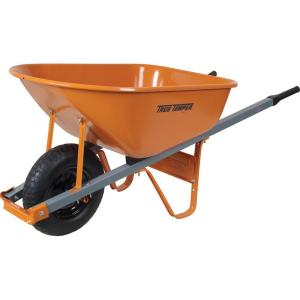
One concept is to suggest a common object, such as a wheelbarrow, and have students creatively list all the tasks that could be done with it. This is similar to the brick use story described in [??? update later].
The second concept is to provide an object to have in hand, then have students dream up a uniquely creative alternative use for the object. For example, [and I did not know it was already in use] manicurists use rice cookers to warm towels for their clients. [Reference: http://www.ehow.com/how_7733273_use-rice-cooker-towel-warmer.html]…and Alton Brown threw his rice cooker out the window because he said it was a unitasker! [Good Eats! Season 9 Episode 6 “Wake Up Little Sushi”] I use screwdrivers to dig up dandelion weeds; then again, I use my weeder to move around hot briquets in my BBQ. If you collected 52 rewards club cards, you could potentially make a stack of playing cards! Students would spend 10 to 15 minutes dreaming up their new task, then have 90 seconds [see http://online.wsj.com/article/SB10001424052748703509104576331044032063796.html <- this is the article that got me thinking about the 90 second elevator pitch although a web search shows that there are many more articles on this topic] to cast out their idea in front of the group – there could be an easel pad for participants to sketch their ideas [but this would not truly be an elevator pitch any longer!]
Thoughts: Keywords in Youth Leadership
What motivates youth leaders? For those youth who are pure Type I, we (see Drive by Daniel H. Pink, 2009) can emphasize a baseline of autonomy, mastery and purpose.
In the YCISL workshop, we can have a forum discussion about various leadership opportunities for youth and rate each on the levels of AUTONOMY, MASTERY and PURPOSE.
Here is how we could explain each of the scales:
AUTONOMY: At the high end, the youth determines how and when something is done. In terms of problem solving, the youth defines the problem and determines the approach.
MASTERY: At the high end, the youth provides original thought and develops a novel and effective skill with a relevance to the problem being addressed.
PURPOSE: The youth understands the direction they are taking and sees how their activity contributes to the larger framework into which similar problems are connected.
Other keywords that helps youth leadership grow (sustainably) are:
EMPATHY: remember who your collaborators and audience are.
VISION/FORESIGHT: leadership is forward-looking. Clarity in the vision is key in knowing your direction, plus for others to want to support you. Foresight is necessary to avoid unnecessary risks and to attain competitive advantage.
TIMING/TIMELINESS: leadership among a group of 1 is not individually significant (ie, is it leadership if no one else is interested?)…however, experimenting with an idea that helps a future leadership idea may be useful. Don’t be discouraged if leadership takes time to grow to a satisfying level. Nonetheless, timing and timeliness are critical to establishing widely recognized leadership. Timing might involve the series of idea development activities such that resources and demand are synchronous with the availability of the product. Timeliness is more of a single instance in which the development of an idea or product gets peak acceptance. Think of this in terms of product cycles. Stock market investing also depends on timing (the purchase of stocks at lows, and sales at highs) and timeliness (the trading of stock on a particular expectation or event).
