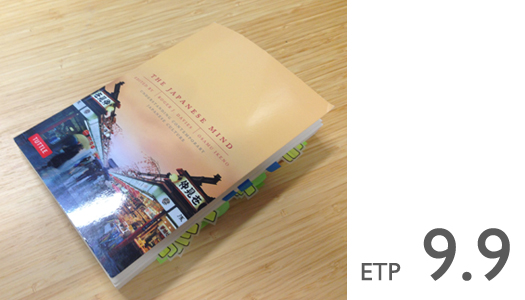
BOOK: The Japanese Mind by Roger J. Davies and Osamu Ikeno (Eds.)
I discovered this book while searching for tourist-type guides to Japan. It is a great find and became my primary read immediately. This is a collection of essays – each of which contain reflections on the Japanese culture, sometimes in comparison to Western culture. “The Japanese Mind” in fact contains a series of student essays (that feel were smoothed out by the editors, Davies and Ikeno) which each generally contain insights, meanings and socio-cultural influence. Reading this book was a marvelous learning experience and will add emphasis on cultural viewpoints to our YCISL workshop.
“Ambiguity is thus indispensable for maintaining harmony in Japanese life, where it has the quality of compromise.” I usually associate “ambiguity” with negative consequences (specifically in the context of Outliers by Malcolm Gladwell and Geerte Hofstede’s Cultural Dimensions), but now can appreciate the relation to positive influences such as harmony and compromise. It is fascinating to think of ambiguity as a skill where one has to be facile in both creating it and dealing with it.
“Silence can also be considered a kind of ambiguity.” In our YCISL workshops, silence usually feels awkward to me but it happens especially at the start of the workshop. In my next workshop, I will think more carefully about the meaning behind the silence and whether it provides any hints to the students’ mindsets.
“As a result, there is a constant emphasis on other people’s feelings in Japan, and parents try to teach their children from a very early age to be sensitive to this information.” While YCISL includes exercises to practice assertiveness, our desire to grow emotional intelligence fits well with any tendency to be highly (or even overly) considerate of the feelings of another person. We can look at this from the perspective of training skilled empathy which includes awareness as well as self-control and sensitivity.
“Until they graduate from elementary school, they are generally not completely conscious of these vertical relationships. However, as soon as they enter junior high school, they are expected to confirm to this rigid system.” This suggests that the timing of YCISL intervention at early high school is perfect. Parents and teachers need to believe that when creative behavior, motivation and productivity are desired, the vertical relationships need to be relaxed.
“Simplicity and elegance are often considered two of the essential aesthetic qualities of Japanese culture, and they have been important features of Japanese life since ancient times.” I would like to try to emphasize simplicity and elegance in all YCISL activities – from our concepts and exercises to the projects and lessons. With these two attributes, we can expect greater teamwork and leadership as well as clearer purpose and deeper passion.
“However, this also inspired a positive attitude toward such desolation in treasuring the beauty that was out of sight.” Being able to value things not in plain sight is a key to innovative thinking. In the case of prototyping where we understand the practical advantages of “fail early, fail fast” and moving on despite obstacles and failures, deriving a positive attitude in these situations is a valuable skill in creating unique solutions in problem-solving.
“Although millions of people continue to learn calligraphy, tea ceremony, and flower arrangement, most do so not to develop their own distinct inner sense of beauty but simply as an imitation of models.” In YCISL, we should seek to develop this inner sense of beauty as part of our exploration for creative energy; this is possible in YCISL because we do not have a rigid model.
Innovation and the Convenience Feature
True innovations have one feature that sets them apart from the numerous pseudo-innovations that are actually experiments carried out on the masses. And that is the CONVENIENCE feature. Innovation is convenient at its core and meets or exceeds the convenience in technologies or methods that are being displaced. Such convenience cannot be an afterthought or involve excessive sacrifice.
The product/process that I feel has been most revolutionized in my lifetime so far by true innovation is photography (yes, more than computing). The industry as well as consumer experience changed in spectacular fashion. Industry shifted and adapted – some successfully but others less so. Consumer choices (and consumerism) grew. But the factor that sets it apart from other can’t-live-without candidates such as computers and phones is convenience. Here are three selected convenience features that make digital photography a true innovation:
1. Convenience of preservation: With negative film photography, preservation (even in the short term) was difficult for both the negative and the print. Negatives would get scratched and colors on prints would fade. With digital photography, image damage due to handling or age is impossible, and archiving and backup are straightforward.
2. Convenience of touch-up: Touching up digital images is massively more accessible than with darkroom photographs…and quicker. Experimentation with effects is also easier thanks to Undo.
3. Convenience of self-mastery: With film photography, one had to take the exposure then wait hours or days for the print results. With digital photography, one takes multiple shots and can delete instantly the ones not worth saving. This raised the virtual mastery level (and motivation) for practically every photographer.
So when choosing to recognize innovation, take a measure of the rise in convenience as well as its accessibility, influence, impact and longevity – on technology as well as society.
Activity: The Thomas Interview
While YCISL emphasizes “Your Personal Story” as a theme, it may be worthwhile to develop an exercise where one develops a personal story of another person through an interview. The interview would involve questions based on a variety of YCISL topics such as “Purpose” and “Motivation.” Through such an exercise, students would learn to frame their personal story using the YCISL elements and appreciate the directions that can be taken.
Thought: Connecting Emotional Intelligence to Driving?
One question that often surfaces in adult minds is “Why are there so many bad drivers?” Traffic accidents, road rage, distracted driving and just plain running into stationary objects are things that most of us have witnessed. Sometimes these incidents are related to weather or mechanical issues but for the most part, I think we can acknowledge bad driving aptitude and attitude is the problem.
So I was wondering whether emotional intelligence plays into the bad driver phenomenon. I am further wondering whether early emotional intelligence education (pre-license) can also contribute to an improved driving population. Further, what role could a parent have in shaping the outcome? After all, I have previously commented as parent driving habits as highly influential on overall child mindset.
Exercise: Turn It Inside Out (or Upside Down)
One of the features that makes Stanford unique is its upside down hierarchy. Think of it as a pyramid standing on its tip. At Stanford, students are at the top (Stanford is defined by its students) followed by faculty then staff and administrators. Stanford’s framework truly nurtures intrinsic motivation by empowering individuals with personal opportunities for mastery, autonomy and purpose.
So along the same lines, let’s devise an exercise by reversing/turning inside out/rearranging common frameworks. Through this exercise, we can pursue the “crazy” end of the brainstorming spectrum and identify opportunities for competitive advantage. Our aim is to strengthen how youth critically question a common framework before we consider accepting it.
In the prototype for this exercise, students will study a restaurant or cafeteria and make a list of how it functions (perhaps using one of the IDEO Method Cards). [One of the YCISL workshop projects was on a school cafeteria which operated quite differently from what I have seen myself – from a ticket machine]. Then the students will try imagineering those functions with a reversed view.
Discussion: I Tried Something New Today!
From the very beginning of YCISL, we included a “Placement” level in our Leadership Objectives framework which is shown in orientation for every YCISL workshop as well as on the CSDGC Youth Development web page. By “Placement” we mean to try different things and see which fits best – kind of like shopping for new clothes or shoes – taking into consideration practical as well as emotional factors.
Our framework says that “Placement” is a practice to start at the pre-High School level, a time where going to college or work still seems distant and hardly discussed. With my own children, we’ve tried new paths when the one they were on didn’t seem to be resonating. My daughter dropped ballet after one class. My son switched from violin to classical guitar after a couple of years. In response to parents of pre-high school students who have enquired about attending the YCISL program, I have advised them to support (encouragement as well as arranging, if needed) their children in trying new things on a regular basis. I composed and posted a white paper on this topic, positioning it as preparation for eventually attending a YCISL workshop. In this way, YCISL workshop participants will hopefully be experience-rich at the time they are in the workshop and can relate better to the myriad of personal skills – seeing how the skills could have enhanced their experience and the potential for future applications.
For our most recent workshop (March 2015), I added a slide in the context of innovation that showed “Try new things to be able to make new things.” This ties in with the feature list exercise which in turn ties into the “Your Personal Story” theme. It also ties in with finding passion, a topic to which I am paying more attention thanks to Scott Adams and his book “How to Fail at Almost Everything and Still Win Big: Kind of the Story of My Life” in which he discusses the prerequisites for passion.
I am writing this entry to precede a discussion note I will add to our YCISL LinkedIn Group page. I would like to let the students know that I tried something new today, and check whether they have tried anything new recently. Trying new things (regularly and as a matter of habit) is a soft skill central to YCISL and should be a lifelong practice.
I tried green almonds today for the first time. Someone I know picked them fresh from their tree this morning and passed them to me at the gym (Thanks, K!). I had an idea of what to expect because I had looked up green almonds on Google a few days before – and words like”crispy and “green apple” helped me prepare for what was in store. This was a fascinating learning experience because I am so accustomed to other forms of almonds (e.g., whole, sliced, slivered, milk, flavored, roasted, dried) and ways to eat them (e.g., with cereal) as well seeing the ads on tv (California is big on growing almonds).

These almonds are a lot different than what I’ve had before – they’re a little fuzzy and have a “fruit” appearance. I like the fresh green color too. After biting through my first one, my attention was grabbed by the layers in the cross-section as well as the soft white complexion of the almond nut that we usually consume. As for taste, the green apple-type tartness from the hull came through clearly but moreso as perhaps an unripe green apple. I didn’t mind. I then sampled just the almond nut at the center and there was a faint milky sweetness that I appreciated.
So where does it go from here? Not every new experience will lead to something. I am considering getting an almond tree for my yard so I can grow my own green almonds. But even if it doesn’t, my growth mindset has been exercised and I am ready to try the next new thing.
What new thing have you tried today?
Exercise: A Message To My Future Self
Earlier, I had made an entry on a WSJ article titled “Revisiting Teenage Dreams” where students watched video messages to themselves that they had recorded while in high school. At that time, I compared it to the end-of-workshop videos that the YCISL participants recorded to capture the thoughts that have inspired them from their Stanford experience.
We have now implemented a new workshop exercise called “A Message To My Future Self” in which students make a video message to themselves – to be viewed 5 years later or beyond. We also created a companion exercise called “A Message To My Past Self” in which students look back and reflect in written form on advice they would give themselves; a sort of lessons learned exercise. This is all tied in under our “Your Personal Story” theme.
In the AMTMSF exercise, we provided prompts with a couple of PowerPoint slides:
1. To say at the start of the video…
hi! my name is [name]
i am from [home]
today is [date]
i am [age] years old.
this is a message to my future self.
2. Possible things to talk about…
who i hope to be.
what i hope to find.
what i hope to do.
what i hope to have.
what i hope to accomplish.
what i hope to achieve.
what i hope to be remembered for.
how i plan to get there.
As with all YCISL exercises, we hope that all students will think more deeply over time about the thoughts raised by this exercise. Some of the students were able to be very thoughtful despite the short preparation time, whereas others could not put themselves in the necessary frame of mind. As we continue this exercise, I hope to find common threads that we can engrain into the YCISL program to encourage more consideration and discussion.
WSJ: Lee Kuan Yew, Singapore’s Founding Father, Dies at 91
Because the “L” in YCISL stands for Leadership, I will make a note of the passing of Lee Kuan Yew, the first Prime Minister of Singapore. Although the YCISL program does not look to adults as leadership role models, there are quite a few valuable leadership life lessons that can be identified from Mr. Lee’s career. Although there are many news articles being published on this, I will use the WSJ article “Lee Kuan Yew, Singapore’s Founding Father, Dies at 91” published March 22, 2015 as a reference point in order to highlight the YCISL topics.
The greatest leaders are those who reach back to their youth life experience to make their marks as adults. Their success is undoubtedly connected to the influence that youthful optimism and imagination had on their thinking and motivation. Their soft skills strength likely began development in their youth and they sustained growth of these skills.
But more than that (and as pointed out in this WSJ article), Mr. Lee succeeded despite criticism – the type of scathing adult criticism we discuss in YCISL that deters people from being expressively creative and optimistically motivated. He demonstrated high emotional intelligence, and understood how to balance and shift priorities in order to repeatedly attain visionary results.
No other political figure that I can think of has ever exhibited the same high level of commitment and enthusiasm. “Father Figure” comes to mind and that is also a core element of YCISL which is based largely on parental skills, emotions and thinking. A belief in intrinsic motivation (let’s call this in-mot from now on) was strong in particular because of the attention paid to mastery, autonomy and purpose – fostering it in himself and sharing it with his people; this is evident in the economic, social and educational accomplishments and gains experienced during his presence. And all this was achieved in the model of a start-up – few resources, little capital and a team of people who believed and shared a vision.
Well done, Mr. Lee.
Emotional Intelligence Lost?
One of the base premises of the YCISL program is that creativity is stifled in youth (Ken Robinson’s posit) and that restoration of creativity is perhaps the largest challenge in pursuing and finding fulfillment in life. I am wondering whether emotional intelligence is in a similar predicament. Like creativity, could it be that people lose significant emotional intelligence by adulthood (assuming there is some base presence in early childhood)? However, the EI loss may be due more to atrophy than fear. The YCISL approach is therefore to develop and share exercises which condition and strengthen both creativity and emotional intelligence.
Where can we observe an absence of EI? The example I will pick on today is the automobile (there are many other places I am sure come to your mind as well).
1. I will start off with what I saw today that led me to write this entry. Smoking a cigarette while driving. In so many ways, this demonstrates low EI. If a smoker tries to use EI, he/she clearly would not be doing it while driving. It negatively affects self and social, and in both the awareness and management dimensions.
2. Then there are those who choose to load/unload on the traffic side of a car. Especially when this involves children, there is a complete lack of personal and social EI.
3. Then there are speeders, tailgaters and red light runners.
4. An EMT favorite are those who choose to groom themselves while driving.
5. A less clear example are drunk/drugged drivers. Does intoxication temporarily impact EI or does low EI lead to likelihood of getting intoxicated?
So let’s try to recognize low EI and make an effort to strengthen it in ourselves. Combine it with knowledge intelligence (KI) and experience the feeling of leadership.

Game/Activity: The Pocket Search & Life’s Journey
Main idea: In life, we search for things and if we are narrowly focused at the time, we pass by many things without much notice if any at all. This exercise is intended to encourage reflection when our mind is searching for something. It is intended to touch on times of failure/emptiness, distraction, incidents and success/goal-reaching.
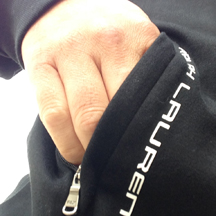
This exercise involves placing items in the pockets of a piece of clothing – the more pockets and more types of pockets (front, back, zippered, etc), the better. Another person is told to find a particular item which is in one of the pockets. For each pocket searched, the second person must take a moment to capture their feelings/emotions. The range of results could be:
(1) finding the item on the first look…was this luck or fate? What might happen when you try again with another piece of clothing? Could you repeat the success on the first try?
(2) the item in the pocket searched was not the item being sought after…how do you value the item that was found? Do you disregard it and keep looking for the item you are supposed to find? Or do you think about how it might be useful in another context? Or do you think about changing what you want to search for?
(3) finding the item after looking through two or more pockets…do you feel validated? Did you feel that maintaining hope was at your core? Did you become more or less optimistic with each pocket you had to search? What satisfaction did you feel when you found the item? Do you remember the moment you found the item or the sequence of moments that led up to the discovery?
(4) finding nothing in the pocket (empty pocket)…is there a feeling of hope because you eliminated one of the pockets or is there a feeling of emptiness? How eager are you to move on the next pocket? How is your positive mindset?
Since this is still in the experimental design stage, expect there to be better ways to tie in with the YCISL program. At this point, it seems that this activity provides a framework onto which we can attach a variety of life lesson reflective questions. Note to self: establish positive mindset before starting the activity.
Material list:
One article of clothing with many pockets (e.g., jacket, five-pocket jeans especially with zippered pockets)
Assortment of articles (the more obtuse, the better for diversion purposes)
Journal for reflection