
Activity: Fast Prototyping with Lego
On the spur of the moment of the current Singapore Polytechnic YCISL workshop, I created an activity to demonstrate (a) visualization of a product from raw material, (b) drawing a sketch of a product that someone else can interpret and understand, and (c) setting expectations when the designer and builder are not the same person.
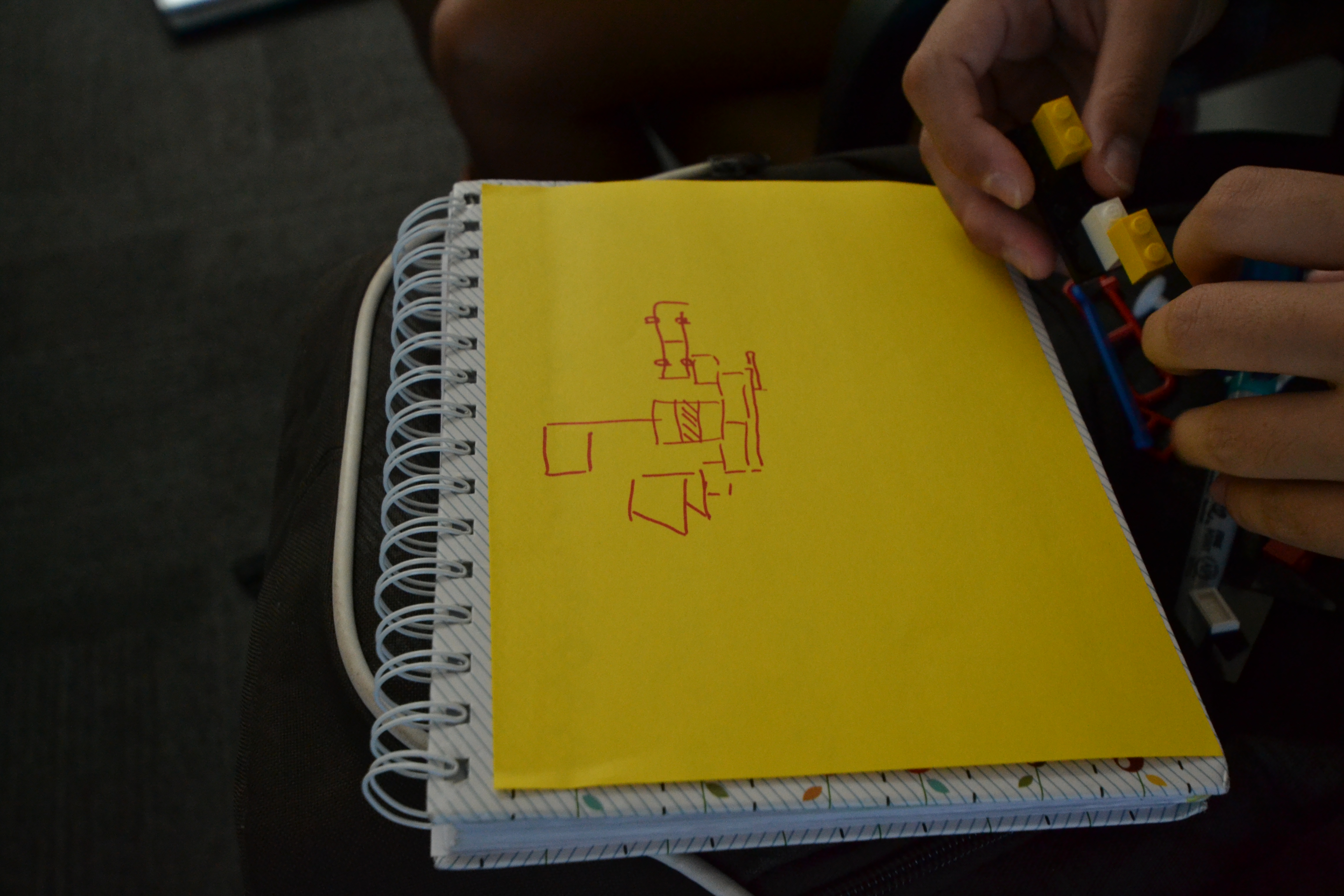
So, each person was asked to grab a handful of assorted LEGO® pieces and lay it out in front of them. Without manipulating any of the pieces, they had to sketch on a large Post-it® something that could be built with the pieces. They had 3 minutes. Without telling them earlier, I then had them pass the pieces and sketch to the person to their right. Each person then had 4 minutes to build the model from the sketch. Next, the model was passed back to the person on the left and we observed reactions.
On the youth level, this was a demonstration about expectations and being part of a multi-step process. Sometimes, not everything will be under your control.

Exercise Idea: Unitaskers Bad, Multitaskers Good
Prodded by Alton Brown’s insistence that kitchen utensils, tools and appliances should be multitaskers, not unitaskers [kitchen space being part of the issue], I am thinking up an exercise to challenge students to be creative about this idea.
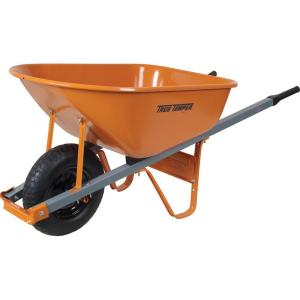
One concept is to suggest a common object, such as a wheelbarrow, and have students creatively list all the tasks that could be done with it. This is similar to the brick use story described in [??? update later].
The second concept is to provide an object to have in hand, then have students dream up a uniquely creative alternative use for the object. For example, [and I did not know it was already in use] manicurists use rice cookers to warm towels for their clients. [Reference: http://www.ehow.com/how_7733273_use-rice-cooker-towel-warmer.html]…and Alton Brown threw his rice cooker out the window because he said it was a unitasker! [Good Eats! Season 9 Episode 6 “Wake Up Little Sushi”] I use screwdrivers to dig up dandelion weeds; then again, I use my weeder to move around hot briquets in my BBQ. If you collected 52 rewards club cards, you could potentially make a stack of playing cards! Students would spend 10 to 15 minutes dreaming up their new task, then have 90 seconds [see http://online.wsj.com/article/SB10001424052748703509104576331044032063796.html <- this is the article that got me thinking about the 90 second elevator pitch although a web search shows that there are many more articles on this topic] to cast out their idea in front of the group – there could be an easel pad for participants to sketch their ideas [but this would not truly be an elevator pitch any longer!]
Thoughts: Keywords in Youth Leadership
What motivates youth leaders? For those youth who are pure Type I, we (see Drive by Daniel H. Pink, 2009) can emphasize a baseline of autonomy, mastery and purpose.
In the YCISL workshop, we can have a forum discussion about various leadership opportunities for youth and rate each on the levels of AUTONOMY, MASTERY and PURPOSE.
Here is how we could explain each of the scales:
AUTONOMY: At the high end, the youth determines how and when something is done. In terms of problem solving, the youth defines the problem and determines the approach.
MASTERY: At the high end, the youth provides original thought and develops a novel and effective skill with a relevance to the problem being addressed.
PURPOSE: The youth understands the direction they are taking and sees how their activity contributes to the larger framework into which similar problems are connected.
Other keywords that helps youth leadership grow (sustainably) are:
EMPATHY: remember who your collaborators and audience are.
VISION/FORESIGHT: leadership is forward-looking. Clarity in the vision is key in knowing your direction, plus for others to want to support you. Foresight is necessary to avoid unnecessary risks and to attain competitive advantage.
TIMING/TIMELINESS: leadership among a group of 1 is not individually significant (ie, is it leadership if no one else is interested?)…however, experimenting with an idea that helps a future leadership idea may be useful. Don’t be discouraged if leadership takes time to grow to a satisfying level. Nonetheless, timing and timeliness are critical to establishing widely recognized leadership. Timing might involve the series of idea development activities such that resources and demand are synchronous with the availability of the product. Timeliness is more of a single instance in which the development of an idea or product gets peak acceptance. Think of this in terms of product cycles. Stock market investing also depends on timing (the purchase of stocks at lows, and sales at highs) and timeliness (the trading of stock on a particular expectation or event).
Photo Essay Ideas: Wasted Resources
The inspiration for our Photo Essay activity is the wasted water essay by Praveena (http://www.indiawaterportal.org/blog/praveena/8064) . Extending this theme of waste, there are a few other topics for the photo essay:
(1) Wasted Paper. I got the idea of this topic when I got a Staples Rewards application and card from the store – it was the 4th or 5th that had been hoisted on me, and it always ends up in the wastebasket. It’s not that there is no use for it, but why isn’t there an easier (non-paper) way to sign up for these rewards? Coupons have already gone mobile and online, so why can’t this card have gone paperless? I think the Borders card is a lot easier too, only requiring an email address. Another wasted paper scenario that makes you thump your forehead is the copy machine that runs a big job only to find out it needs to be run again for some reason (eg, missed copying the flip side of the original). Why can’t there be more intelligence built into a copy machine’s interface? And what about all that junk mail?
(2) Wasted Plastic: Why do so many products come in large plastic packaging? Some are worst than others but is there not an easy solution? Then there are plastic containers such as yoghurt cups or shampoo bottles. Some containers such as restaurant food bowls may make great candidates for reuse (such as planting pots).
(3) Wasted Light: Sun tunnels are a great and efficient way to get light where it is needed. How else can we address wasted light?
(4) Wasted Heat: People have spent quite some time thinking about using waste heat – such as in data centers. Are there are any ideas pertaining to other sources of wasted heat?

Thoughts: What Should Youth Know About Copyright, Trademarks and Patents?
When one innovates, one should consider legal protection of intellectual property through use of copyright, trademarks, patents or other methods. In the case of youth, one might naively think that products they create are not of potentially high value and therefore, legal protection is not necessary. I was just reminded of the copyright notice I placed in my first software product CatTrack II back in 1988. While I never considered that the software would be a huge commercial success, I wanted to be sure that the work was not copied without due credit – just as I had learned about for journal publications and citations.
Remembering that a principal tenet of the YCISL program is to remain unencumbered by adult frameworks, it is probably adequate to (1) demonstrate how to attach such protection and (2) only use personal property and resources for direct product development – and not discuss the battles associated with intellectual property protection. After all, part of the purpose of intellectual property protection in the adult business world is intended to stifle competition rather than to amass resources to find the best solution. I would hope in the future that the counterproductive application of intellectual property protection as it is framed today fades in favor of a more team-like approach where all that matters is finding the solution especially to some of the world’s most urgent problems.
Exercise: Saving Household Running Water
One of the biggest resource wastes that we are often exposed to is running (and unused) water – straight from tap to drain. For example, we might be waiting for the shower water to flush the cold water that has been sitting in the pipes and the shower water to warm up. We might be brushing our teeth and not turning off the tap. What can you design to make use of this water? Yes, there are already recirculation systems that use the wasted heat (eg, radiant floor heating) or hot water recirculation systems that keep warm water near the point of use. Tankless water heater systems that are placed near the point of use can also address this issue.
But there is still an opportunity to collect the wasted water and use it efficiently by leveraging ease of use. For example, we could challenge ourselves to design a budget collection system that could be used to water the garden/house plants or wash the floor or rinse the shower door after use (control soap scum deposits).
Exercise: Ball Conduit
Build a conduit out of some simple materials (eg, aluminum foil, straws and cellotape) and roll a ball (or egg) into different receptacles some distance away. The foil would mainly make up the conduit. The straws could act as support. We can make it more challenging by (a) having to go around corners, or (b) use a heavier object such as a golf ball, or (c) go over varying distances without allowing material modification of the conduit. We could make this competitive by making the object delivery a race. For example, we could have three or more buckets at the end (perhaps at different heights, and the conduit design that is the fastest to deliver an object into each receptacle wins.
I came up with this as a way/reason to give out an award for creativity, innovation and leadership. The competition could produce a clear victor based on the quickest time (or success if we use eggs and require that the eggs do not break).
Lesson Framework: Unfamiliar, Out of the Comfort Zone, Think Out of the Box
Most of the workshop content should be aligned or sourced from familiar ground (eg, something you can do at your school) in order to fuel creativity and drive innovation, but there is also benefit to incorporating some thinking and experience from new and unfamiliar realms (but still from the appropriate age context). I was thinking about the Redesign Quick Challenge guideline I drafted around a beverage taste test concept. This comes from my exposure to flavor chemistry and the taste tests that are part of the research I observed at UC Davis. I also am incorporating the focus group method that I observed at Handspring. This demonstrates that incidental experiences can contribute to new ideas.
Two other well known phrases associated with working in unfamiliar settings are “Out of the Comfort Zone” and “Think Out of the Box.” These phrases can be described in more consequential terms: what is the point of being out of the comfort zone, or thinking out of the box?
Thoughts: What can I say about “Risk”?
In my course Environmental Toxicants, we discuss risk:
(1) Risk Compared to Uncertainty. There is high risk with high uncertainty. Therefore, to go towards less risk, we need to have less uncertainty (ie, more information). When we are being innovative, there will usually be some significant amount of risk because we cannot instantaneously gather all the information needed to make it work. We don’t know whether enough users will adopt it (as an example).
(2) Risk Compared to Failure. We sometimes worry about the risk of failure. This requires risk management to navigate out of the direction of failure. We can anticipate the riskiest factors and try to minimize their influence on failure.
(3) Perceived Risk. Different stakeholders might have different perceptions of risk. For example, different customers might perceive that adoption of a product of technology presents a risk to their business. They estimate the risk based on how they believe the change would affect their business. In the YCISL context, a school administrator might base his/her judgment of allowing the students’ product from being placed in school on perceived risk.
(4) Acceptable Risk. Almost all the time, change involves some level of risk but in search of a solution, some level of risk becomes deemed acceptable. When a company releases a new product, there is always a risk of a field failure or market rejection (for example). For the YCISL, we must show that leadership involves taking on risk (in a managed approach) and learning from failures as well as the successes.
Team Exercise: Newspaper/Newsletter Re-Design or Project Studio
Here is a platform from which we could (a) do the Redesign Challenge (incorporate a new section or reformat an existing section to involve a sustainability theme) or (b) do the Project Studio – something that the students could go back to their home school/university and publish. Remember that we want to make this more than an exercise – we want to have feasibility, efficacy and a solid chance at survival (ie, sustainable).
Most students should be familiar with what roles are involved in a newsletter or newspaper team, but here are a few:
(1) Editors (Chief, Managing, Section, Copy, Creative)
(2) Writers/Reporters (content creators?)
(3) Graphic & Layout Designers
(4) Advertising Executive
(5) Budget/Finance Executive
(6) Printing/Publishing Executive
(7) Distribution
(8) Technology Lead
