
Thought: Are Jigsaw Puzzles Good for Training Divergent-Convergent Thinking and Creativity?
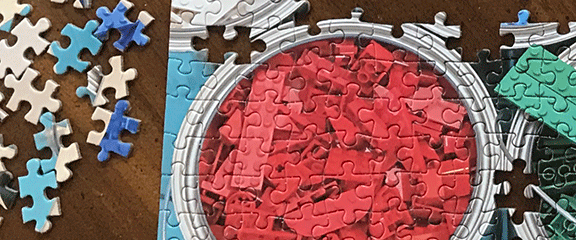
One of my newest obsessive hobbies is now jigsaw puzzles. After completing about 10 puzzles in the past 3 months, I have begun to wonder whether jigsaw puzzles build creativity and are a good example of an activity that uses divergent-convergent thinking. Could a jigsaw puzzle exercise be designed for YCISL workshops just like how we have a Lego activity to demonstrate rapid team prototyping?
Putting together jigsaw puzzles involves creative energy because there are many solution paths and solution strategies. Also, there are multiple and switchable directions: finding a piece that fits a hole or edge(s), or finding a hole or edge that fits the piece you have picked up. There are trial-and-error methods as well as visualization methods that involve rapid eye movement. There is not only shape matching. One could involve color matching as hints. So even though the end result should be the same assembled puzzle (assuming you finish the puzzle), there is a creative element because of the variations that are essentially guaranteed; even if I were to solve the puzzle twice, it is improbable that the exact same solution path would be repeated – and think of the probability that the same time-based profile would be repeated.
Let us also consider how jigsaw puzzles would make a good model for training divergent-convergent thinking. Usually, the jigsaw puzzle pieces have some sort of distinguishable pattern based on the number and directionality of the tabs and slots. These are sortable features and are part of my strategy. So given a particular hole or edge waiting to be connected with a piece, there are certain piece patterns that could be fit and other patterns that could be deductively reasoned not to be a fit candidate. So we can select several candidates to fit a position – this would be the divergent thinking step. We could choose two or more candidates for a hole using the criteria of the moment. We would start our convergent step by selecting a candidate piece and trying to attach it. If there is a perfect fit, great! (but sometimes it is a fake fit), and if that piece was not the right fit, then we would go back to the pool of candidates or create a new pool of candidates (if we learned something from that non-fit attempt where we figured the pool was not going to work). The big bonus of using jigsaw puzzles to model divergent-convergent thinking is the fast thinking cycle aspect because the divergent-convergent thinking steps are usually repeated in clusters. These clusters could be sized by varying the time periods spent on finding matches.
With the creativity and divergent-convergent aspects confirmed, what fun ways might there be to make this worthy of a workshop workout? The first round might involve individual efforts establishing the time periods of sustainable puzzle solving (ie, how long before you need to take a break and rest the mind and eyes?) The next level might be a team effort to reflect interpersonal communication and group dynamics skills. A trick version might be to include a piece that doesn’t actually belong.
The jigsaw puzzle lessons would be compared to real world problems where the pieces may or may not be at our disposal, and we have to practice divergent-convergent thinking with an understanding that the final product may be quite different from what we expected at the start.
Fun. Can’t wait to try it. Now if only I can figure out a version of this that would work over Zoom.
NYT: Nine Nonobvious Ways to Have Deeper Conversations
I came across this article through LinkedIn today. The article lists various ways to re-engage with each other especially during this time of un-shakeable stress. “Nine Nonobvious Ways to Have Deeper Conversations” is an Opinion article by David Brooks dated November 29, 2020 on nytimes.com.
The author’s suggestions make sense to me and I will undoubtedly be spending some time thinking how to turn these into YCISL workshop actions. But because I am currently engaged in a series of Popcorn with Colin discussions on creativity, in particular a tribute to Sir Ken Robinson’s epic TEDTalk “Do Schools Kill Creativity?” (originally titled “Schools Kill Creativity.”), I will dwell on the suggestion to “Ask Open-Ended Questions” and the timeliness of this for the online learning pivot.
This idea fits into the Divergent-Convergent Thinking and Asking Questions component of the YCISL Innovators Toolkit series. Open-ended questions (or problems which are inviting of innovative solutions) have the potential to stimulate and strengthen creativity. So the task is not to simply ask an open-ended question, but to frame a worldview that accommodates various perspectives and past experiences. We need to use design thinking in creating open-ended questions.
I haven’t had much practice at this, but let’s give it a few application attempts.
Here is a Physics homework problem I found on the web:
Gravitational Potential Energy GPE = mg∆h
12. A 5.0 kg mass is initially sitting on the floor when it is lifted onto a table 1.15 meters high at
a constant speed.
a. How much work will be done in lifting this mass onto the table?
b. What will be the gravitational potential energy of this mass, relative to the floor, once it is
placed on the table?
c. What was the initial gravitational potential energy, relative to the floor, of this mass while
sitting on the floor?
What if we changed this question to “Place a dumb bell (or other object) on the floor. Lift it onto a table at a constant speed. Use a scale and/or tape measure, if desired. It’s ok to estimate.”? Would this be too challenging? Could this be a more fun application-type question that helps the student use visualization as well as experimentation skills? Not all the questions would have to re-framed this way. But it does give a more first-person real world feel about how science applies to things we do on a daily basis.
—
And here is a Chemistry homework problem I found on the web:
Coffee cooling
A mug of coffee cools from 100 ℃ to room temperature, 20 ℃. The mass of the coffee is
m = 0.25 kg and its specific heat capacity may be assumed to be equal to that of water,
c = 4190 J. kg-1. K-1.
Calculate the change in entropy
(i) of the coffee
(ii) of the surroundings
What if we changed this question to “Your morning mug of coffee/tea/water cools to room temperature. Use a scale and/or thermometer, if available. Otherwise estimate.”? Hopefully, everyone has been aware at some point that a hot beverage gives off warmth and gradually cools. There is also the intrinsic motivation factor (that we are fond of in YCISL) where we involve mastery, autonomy and purpose (added through the use of another Innovator Toolkit skill: Filling & Crossing Gaps).
—
As another example, I require online seminar logs for a seminar course at Stanford. This is for proof of attendance. But instead of asking for a summary of the seminar presentation, the question is “Describe in 2-3 sentences how this talk connects with or relates to your interests, or your MS studies.” In general, most responses will be quite different reflecting perspectives and background. This makes it more interesting and informative for me. Note though that some students find this open-ended question challenging and defer to the seminar abstract as a basis for their thoughts – as opposed to internal stimulation and connections.
—
Re-reading the examples above, there is probably more fine-tuning possible to engage each other better. An example is to use the Positivity Innovator Toolkit skill and “garnish” the problems with emotionally positive words and uplifting expressions. “Your delicious morning mug of…”
A good topic for future discussion.
WSJ: Universities Abandon Reason for a False Idea of ‘Empowerment’
This is a commentary on “Universities Abandon Reason for a False Idea of ‘Empowerment’” by Aaron Alexander Zubla which appears as an opinion article in the Saturday/Sunday, August 15-16, 2020 print edition of the WSJ.
I empathize with the thought that the new requirement is inappropriate…albeit perhaps with a different worldview.
Looking at the CSU Press Release CSU Press Release “CSU Trustees Approve Ethnic Studies and Social Justice General Education Requirement” and California Assembly Bill No. 1460 which addresses this ethnic studies GE requirement at CSU, this appears to be a case of lipstick on a pig. The stated case for academic (scholarly) and social benefit is overly optimistic…it could have the opposite effect too. Why isn’t there instead a special task force that addresses the issue at all levels of society (and globally in-between)?
Let’s return to the WSJ article…
To answer my own question about why place this un-promising requirement in a university setting, it seems to be motivated by image-based appeasement. The WSJ article describes this as “another sign of the politicization of universities” and laments that “For decades the humanities have tilted progressive.” While this matches the motions in my worldview, my perceptions of the direction are slightly different and tend towards a comedy of errors as opposed to an evil plot.
CSU could have simply offered courses in the history or political science departments to add courses which relate to sociological race issues. GE already includes these courses. The idea that a dedicated 3-unit course will benefit student scholarship is like a car salesman’s sell (they try to go over every single feature hoping that one will click – instead of listening and responding in a precise manner). And even if 10% of any class cohort retains, how have they been empowered? Knowledge without EQ is not empowerment.
How else is my worldview different? I think the scope is not sufficiently global. What if the requirement included international relations and global studies courses? What if it went beyond social justice and the direction of political winds? The challenge is not so much to become aware of the strife, but more so one of looking for positive lessons. I predict that these courses will be negatively-toned which is the switch-flipper to off for most people…especially those already with many distractions. Which makes me think…should this also include courses from the psychology department.
One last comment on the idea in the article that non-humanities subject areas (eg, medicine, accountancy and engineering) are set in supported applicable fact alone (the author uses the word “truth”). Not so. Social justice has entered these programs as well. However, they may be better models than what is being instituted by CSU where students can apply critical thinking as to whether these social issues are important. There may be no choice but to align in a GE course. Even so, how many will have learned anything?
Inc.: Google’s Plan to Disrupt the College Degree is Absolute Genius
This is a comment on the article “Google’s Plan to Disrupt the College Degree Is Absolute Genius” by Justin Bariso (founder of EQ Applied).
The worldview that this article describes is over-stated and did not apply emotional intelligence despite that being the author’s area of expertise.
- Social awareness tells us that there already are community colleges and vocational schools which offer certificate programs. Many of these programs require hands-on experience and serve that need. There are programs which could be completed remotely – even asynchronously – but these students are not competitive in terms of readiness and experience. With a certificate, one may be able to find a job in the certificated field, but the impression from the certificate alone will be less competitive. There may be exceptions for those who, along the way, gained invaluable personal experience and insight.
- Self-awareness tells us that there is a reason why some students do not go to college and why some do not thrive in college.
- The Self-management lesson is to supplement your career plan with such a certificate program, but not rely on it. In this way, a certificate program (and MOOCs too for that matter) are not substitutes for a college degree (actually, I’m now referring to graduate degrees because undergraduate degrees are not as practical as they used to be). Would you be able to get into a good graduate school and excel with a certificate? Since times may change, the most appropriate answer would be “Maybe, but unlikely.”
- The Social management side of this is how you figure out the value of college vs certificate when you are at the branch in the road. If you are in the top 10% of your graduating high school class, would you have good reason to believe that a certificate program will get you to where you want to go? The smart thing to do may be to try a certificate program as a gap year program then choose where and what to study in college if you are not presented with better options. It’s an investment choice.
There certainly isn’t any disruption with the certificate. The real disruption was the promise made to people to get them into a college although they didn’t need it. This move to pack in more students lowered the base standard of college education and has made it more challenging to prepare students well. This drove up operational costs and created a job applicant pool that was as generic as ever.
And “genius”? About as genius as the term is used at Apple Stores.
Concept: Education Accuracy vs Education Precision
Modern education intentionally tries to distribute learning achievement by limiting the attempts at understanding. This is based on the classical requirement of memorization in the early age of scholarly thought and written recordings. As you know, thinking and speaking outpaces writing (and typing even) so memorization and recall among scribes was a priority. This bias towards memorization talent in education creates knowledge gaps upon which academic differentiation is made.
The limited form of education targets and seeks to identify a very particular type of student, especially one good at memorization. Educators are equipped with skills and materials solely towards this bias and incentivized to stay within the bounds of this program. With this perspective, we could think of today’s education as having a precision design that provides a positive outcome for a minor fraction of the student population.
An equitable educational system re-design would provide positive outcomes for practically the entire student population and embrace education accuracy as the vision. This would require identification of learning strengths and preferences of each student, and guidance to a curriculum and educator that would allow academic success. Here are several ways that education accuracy could be implemented:
- Allow for multiple chances to memorize without penalty, and encourage accretive learning. This would provide a path to subject mastery as opposed to having knowledge gaps set in.
- Design assessments based on how a student is best able to reflect their subject mastery. Provide coaching on learning strategies for the various assessment types.
- Learning schedules, pace of learning, and size of learning segments (eg, attention spans) should be tuned to the student. Presently, education is scheduled for the parents’ convenience, and segmented without consideration for the student.
- Group students for symbiotic learning such that they would elevate each other’s progress. A teacher should be able to teach at a level that suits all the students in a class.
- Get performance feedback from students and promote their learning autonomy through involvement in academic decisions and problem-solving. Provide activities that elevate awareness and intrinsic motivation.
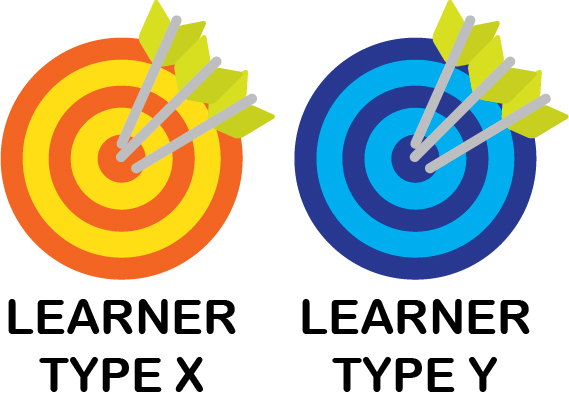
I imagine teachers would welcome a shift to education accuracy. Their personal motivation as well as relationships with students would be healthier and stronger. And I am also certain that teachers have many of their own ideas how they could re-design their lessons and teaching styles for accuracy.
The YCISL is seeking to kickstart this hyperleap to education accuracy by developing a series of EQ-assessments for application to each teacher-students grouping. It would involve three stages: pre-instruction, mid-instruction, and post-instruction. The pre-instruction assessment would prepare teachers and students for the partnership they are about to experience. The mid-instruction assessment (or two) would check for progress and allow for corrective action, if necessary. And the post-instruction assessment would evaluate the effectiveness of the EQ-based approach to learning, and perhaps be reported as part of student performance profile as they advance in their education.
Idea: The YCISL Teacher Toolkit
We published a YCISL Toolkit Series for parents who suddenly found themselves needing to become their children’s teacher. There was so much uncertainty about educational continuity as well as finding a schedule that would work. The idea from the YCISL program was to nurture thinking skills rather than expanding content knowledge.
Around the world, most schools reopened in an unfamiliar online mode. Even at Stanford, it took a leap of faith for course instructors to shift to an online mode. Like most, we became highly dependent on Zoom for videoconference communications…and we have experienced Zoom fatigue too. Most educators are searching for educational technologies to step in so that student interest is maintained despite the loss of close contact.
However, in the YCISL worldview, we see this global disruption in education to be an unbelievable opportunity for a quantum upgrade to teaching. Specifically, we should utilize EQ-based methods to elevate class awareness and management skills based on the varied behavioral responses of students and teachers to the virtual classroom. This wiki entry and the following YCISL Teacher Toolkit Series is our attempt at launching this jump into hyperspace.
To prepare the series, we are pondering the following:
- What are the questions that a teacher may be asking themselves?
- Do teaching goals and expected outcomes need to change?
- What are the development opportunities for teachers that would be of benefit now and also in the future when students return to school?
At this time, we are planning on using the same cornerstones of the YCISL Parent (Teacher) Toolkit which includes (1) Asking Questions, (2) Divergent-Convergent Thinking, (3) Filling & Crossing Gaps, (4) Fast Creative Thinking, and (5) Positive Thinking. Our approach will be to show that EQ-based learning can be integrated into each of these skill areas so that teacher-student and student-student interactions have purpose and meaning, and new gold standards are established.
Japan Times: Coronavirus crisis offers chance to update Japanese schools
I found the Japan Times article “Coronavirus crisis offers chance to update Japanese schools” written by Louise George Kittaka and published April 20, 2020 to be an interesting push for more educational technology especially in this time of school closures and online remote teaching.
From the article, I understand that there are schools in Japan which still largely utilize paper-based learning and that some view this as a disadvantage especially during this pivot to online. As a person who still prefers to read newspapers in print form, I believe a move to digital learning content is not the only solution as much of the article suggests.
I have made past comments on the issues with integrating educational technology and the lackluster value they present. As with technology in most cases, the quantity may be raised, but the quality is unlikely to improve. This lack of quality upside from edtech results in widespread frustration in chasing technologies, equipping teachers with something that works from end-to-end, and user experience. The use of iPads in US schools is an example of over-promise and under-deliver.
As a proponent of more EQ in teaching, YCISL feels there is instead now a significant opportunity to reflect on changing the educational process, not just its tools. Will we find that students who learned best in classroom settings remain equally achieving in an online setting? We already know that learning performance is dependent on a variety of factors such as learning styles, pace and group settings. It is the detection of these factors and ensuing customized teaching methodology that would offer the greatest benefits. We need to boost the awareness and management skills of teachers and students, and generally broaden the public appreciation for EQ in education.
For all the panic and fear that has spread through reactions to the virus, education has been severely impacted and we need to be caring for its resiliency, recovery and general good health.
NIMH: “Panic Disorder: When Fear Overwhelms”
“And he would point this out as evidence that we fear the judgment of our peers, and that we’re embarrassed about showing our ideas to people we think of as our peers, to those around us. And this fear is what causes us to be conservative in our thinking. So we might have a wild idea, but we’re afraid to share it with anybody else.”
Tim Brown, Serious Play 2008
—
With an interest in leadership especially the rise of creative innovating skills, I have been observing intently the leadership during this virus wave. Not surprising, most leadership has been average and in a follower mode (ie, non-innovative). At the low end of the innovation spectrum is the governmental action with regards to shelter-in-place and face masks which replicates the strategy from 1918 for the Spanish Flu. In contrast, there has been some exemplary EQ-based responses such as in Germany, Sweden, South Korea, Taiwan, Singapore and Japan.
This led me to see if the poorer responses can be diagnosed with a leadership disability condition. I found that Panic Disorder aligns closely to what we have seen. Referring to “Panic Disorder: When Fear Overwhelms” from the National Institute of Mental Health, which lists the following symptoms:
- Sudden and repeated panic attacks of overwhelming anxiety and fear
- A feeling of being out of control, or a fear of death or impending doom during a panic attack
- Physical symptoms during a panic attack, such as a pounding or racing heart, sweating, chills, trembling, breathing problems, weakness or dizziness, tingly or numb hands, chest pain, stomach pain, and nausea
- An intense worry about when the next panic attack will happen
- A fear or avoidance of places where panic attacks have occurred in the past
There is an inability to focus and a desire to collapse. There is a tendency to interpret small (mostly) harmless sensations as threatening and to want to make everyone around them feel the same way. We also may notice the absence of positivity and gratitude, two areas that YCISL focuses on.
This virus response experience has shown the need for YCISL to nurture more resilient leadership in our youth population. To empower youth with confidence to step through risk and uncertainty, and create opportunity, purpose, and hope. We remind ourselves of Tim Brown’s points about the growth of fear in adults and the aversion to embarrassment and negative judgment.
Alison Ledgerwood: A Simple Trick to Improve Positive Thinking (TEDxTalk)
The 2013 TEDxUCDavis talk by Alison Ledgerwood “A Simple Trick to Improve Positive Thinking” has had a significant influence on the presentation of positivity in the YCISL program. Her graphic illustrating how a positive event has a sharp peak effect, and a negative event has a blunt dragging effect is used in the workshop slide set to show how critical it is for leaders to work smart and diligently at maintaining stakeholder positivity. This further ties to the sustainability of intrinsic motivation which is also driven by constant positive thinking.
In her talk, she specifically describes the effect of informing people about a surgical procedure in terms of a success rate versus a failure rate. She further gives examples of (1) a governor’s likability based on which direction he initially messages, and (2) how long it takes people to convert between good news and bad news. This, I find, is an amazing coincidence. Do you?
Positive thinking and framing is an essential innovator and leadership skill. Innovators with the skill maintain their sense of purpose and intrinsic motivation. Leaders with the skill are more agile and appreciated. When a crisis unfolds, these skills go on display and accelerate a successful recovery.
If you are willing to invest in your positive thinking, the media is currently awash with negatively framed statements. See if you can re-phrase some of these statements in a way that stimulates “glass half full” feelings and a sense of hope. Learn to turn negative messaging into positive messaging before you seek meaning and knowledge. You will feel more productive and empowered.
BBC News: Coronavirus: The school of Mum and Dad
An article on BBC News (Coronavirus: The school of Mum and Dad by Jane Wakefield) prompted the following thoughts in applying YCISL principles and methodology to the disrupted education of many children.
Many parents may currently be seeking ways to sustain learning for their children amid school closures. In the past, there have been lengthy school holidays which may be filled with youth camps and special care programs. Currently, those are less likely of an option, and parents find themselves in the role of teacher.
One model would be to emulate a teacher and open up the textbooks and work from there. There are also online resources which could be good solutions. And…using YCISL type thinking…there is another possible route which focuses more on continuing the development of thinking skills rather than knowledge acquisition. Here are a few opportunities:
- Asking Questions. Children are generally taught in school to provide answers. Help them build skill and confidence in asking questions and consequently become a better active listener for interactive dialog. For a basic exercise, have your child listen to something (anything really: a video, you reading a book, a television show, a song, a poem, etc) , then have them ask or write down questions to prompt a conversation with you. Notice facial and tonal expressions that show interest, understanding, confidence and curiosity.
- Divergent-Convergent Thinking. Most of formal education is directed towards convergent thinking (often logical deductive reasoning). Help your child develop innovative thinking skills by practicing divergent thinking coupled with convergent thinking. For a basic exercise, choose something that you need to do (eg, make a sandwich), and have your child describe several ways it could be done. This technique could be applied to writing and math as well.
- Filling and Crossing Gaps. Schools move students through grades with knowledge gaps and those gaps become handicaps later on. However, most real world problems that need to be solved involve knowledge gaps and children should be prepared to fill or cross those gaps. For a basic exercise, ask your child to answer the question “how long does it take for an ice cube to melt?” But you didn’t mention whether it was indoors, outdoors, in summer/fall/winter/spring, or in your refrigerator/freezer (that was the missing information).
- Fast Creative Thinking. The homework, tests and exams most students experience utilize active recall usually on the order of hours, days, weeks, and months. For leadership and innovation thinking, fast thinking especially for creative thought needs to be strong. Encourage sprint-like, no self-editing thought collection using this basic exercise: find something that you would like to name, and write down every name that comes to mind (use sticky notes, a piece of paper, or a whiteboard). Catalog the ideas. Try the exercise again with a different something and aim for greater fluidity, greater output and capture speed, less self-doubt and less self-editing.
- Positive Thinking. Children have a positivity mindset that should be nurtured and kept resilient. The best leaders are able to frame positively and design programs that make their team positive through emotional intelligence and intrinsic motivation. A basic exercise could involve the practice of gratefulness: a well-known exercise for attaining more restful sleep is to think of something to be grateful for just before falling asleep. With your child, tell each other what you are grateful for at bedtime. Keep a log.
The five skills described support academic as well as professional and life achievement. They are valuable life lessons that are not a core part of any formal educational curriculum. As a parent, you have an opportunity to be a teacher/coach of these lifelong skills. Feel free to customize the exercises to situations that your family enjoys – to accommodate attention spans, energy levels and other uniqueness.
